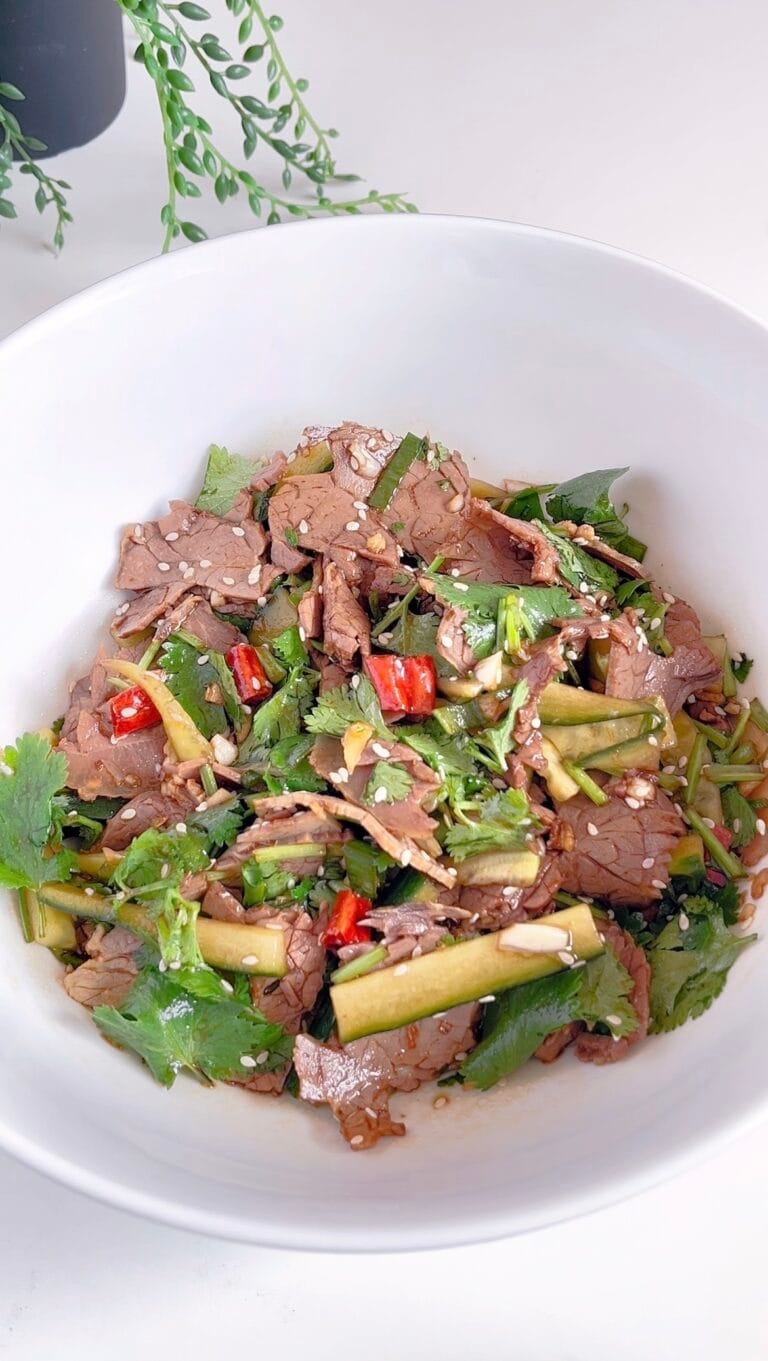
Korean Spicy Stir-fried Squid
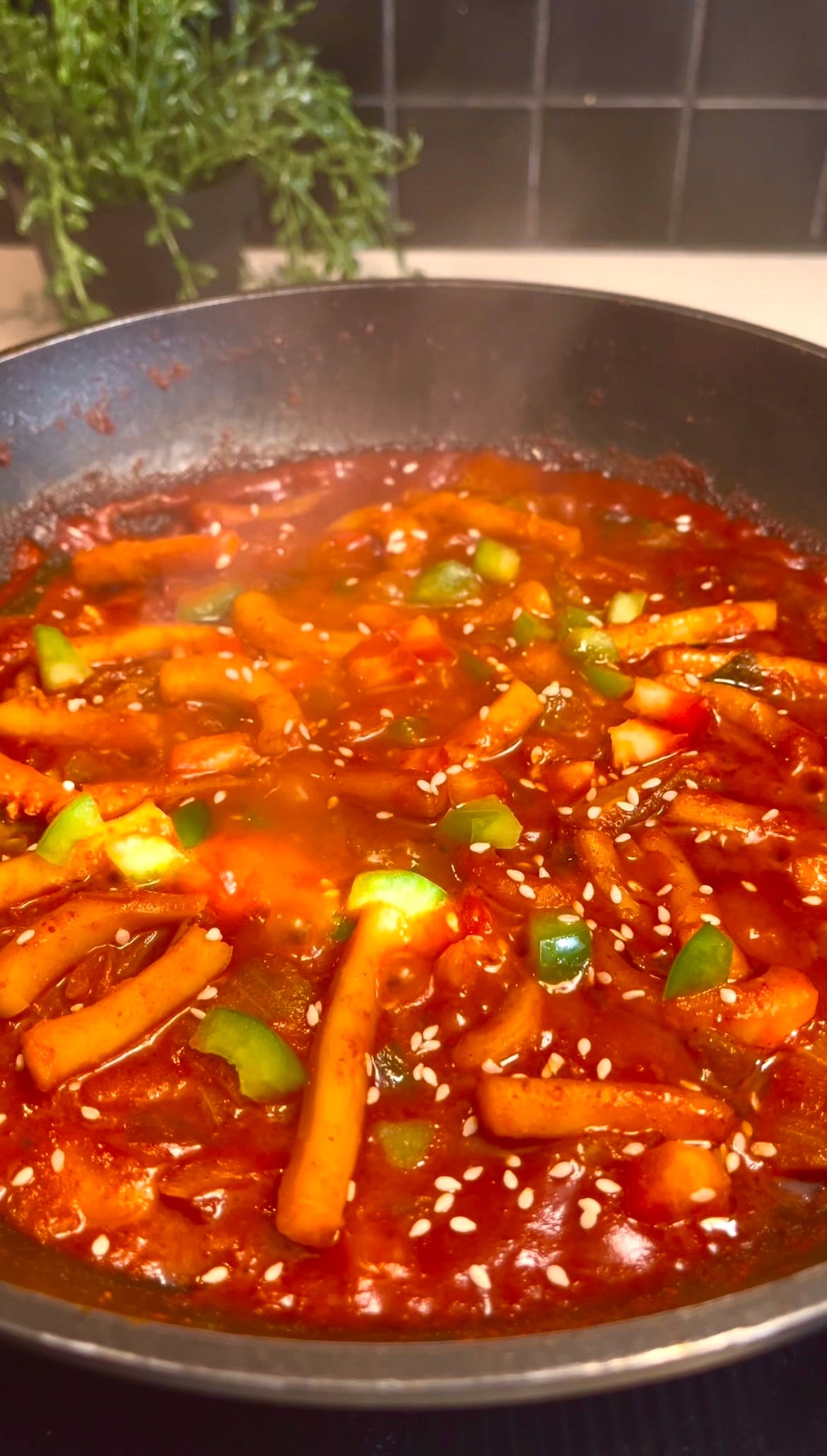
Korean Spicy Stir-fried Squid, or Ojingeo bokkeum, is a beloved Korean home-cooking staple. It’s the kind of dish that appears on the dinner table regularly in Korean households, which is so flavourful and satisfying. Pile it over a big bowl of steamed white rice, maybe with a fried egg on top, and you have one of the most complete and satisfying weeknight dinners imaginable. It’s the sort of meal that makes you close your eyes on the first bite.
The flavour of this dish is built on one of the most iconic flavour combinations in Korean cooking, gochujang and gochugaru working together. Gochujang is the deeply fermented Korean red chilli paste that brings richness, depth, a subtle sweetness, and that characteristic complex heat that is uniquely Korean. Gochugaru is the ground Korean chilli powder that adds bright, vivid heat and that gorgeous deep red colour that makes Korean stir-fried dishes look so spectacular and vibrant. Together, they create a sauce that is bold, fiery, deeply savoury, and completely unlike anything you can achieve with other chilli sauces or pastes. If you’ve never cooked with both of these ingredients together before, this recipe is going to be a revelation.
The squid in this dish is the perfect vehicle for this sauce. Squid has a clean, mild, slightly sweet flavour that absorbs the bold sauce beautifully, and when cooked correctly it has the most wonderful tender, slightly chewy texture that is incredibly satisfying to eat. The cabbage and onion add sweetness and body to the dish, the scallion adds freshness, and the garlic ties everything together with that essential aromatic backbone. The finished dish has this gorgeous, glossy, deeply red sauce that clings to every piece of squid and vegetable. It looks as incredible as it tastes.
The technique here is beautifully simple. Everything goes into the pan together, a lid goes on, and the dish essentially cooks itself as the water reduces down into a thick, glossy, flavourful sauce. There’s no complicated stir-frying technique required, no high heat wok skills needed. Just a pan, a lid, and a little patience while everything bubbles away and the sauce reduces to that perfect consistency. It’s genuinely one of the more accessible Korean recipes you can make at home, and the results are absolutely spectacular.
Ingredients
Ingredients:
- 250g squid
- 1/2 cup cabbage, chopped
- 1/3 cup onion, chopped
- 2 tbsp scallion, white part only
- 1 tbsp garlic, minced
- 2 tbsp cooking oil
For the sauce:
- 1 tbsp gochujang (Korean red chilli paste)
- 1 tbsp light soy sauce
- 1/2 tbsp sugar
- 2 tbsp gochugaru (Korean chilli powder) or any chilli powder
- 2/3 cup water
To garnish:
- Green and red chilli or capsicum, chopped
- White sesame seeds
- Sesame oil, to drizzle
Instructions
1. Prepare your ingredients
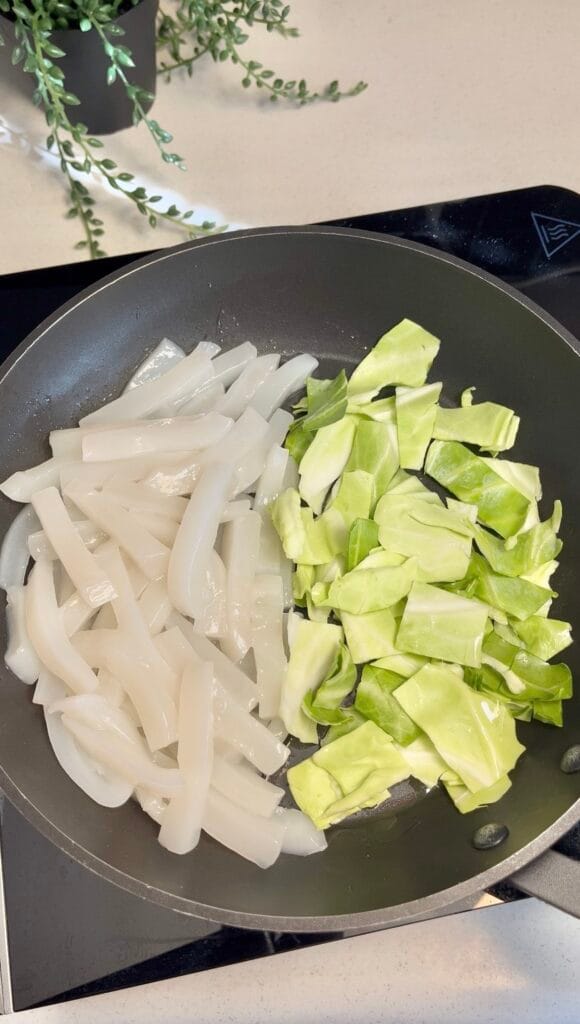
Start by preparing your squid. If you’ve bought whole squid, pull the head and tentacles away from the body, remove the clear quill from inside the body tube, and peel away the purple skin if it bothers you (it’s completely edible but some people prefer the cleaner look without it). Slice the body into rings roughly 1-1.5cm thick, and cut the tentacles into manageable pieces if they’re large. If you’ve bought pre-cleaned squid tubes and tentacles, just slice them up and you’re good to go.
Roughly chop your cabbage into pieces roughly 3-4cm. You want them large enough to have some presence in the dish and a bit of texture after cooking. Roughly chop your onion into similar-sized pieces. Cut the white part of the scallion into 2-3cm lengths. Mince your garlic finely.
Measure out all your sauce ingredients, the gochujang, light soy sauce, sugar, gochugaru, and water, and set them aside together so they’re ready to add all at once.
❤️ Tip: Make sure your squid is as dry as possible before it goes into the pan. Pat it thoroughly with paper towel after cleaning and cutting. Wet squid releases a lot of liquid into the pan, which can make the sauce watery and thin rather than thick and glossy. The drier the squid going in, the better the final sauce consistency will be.
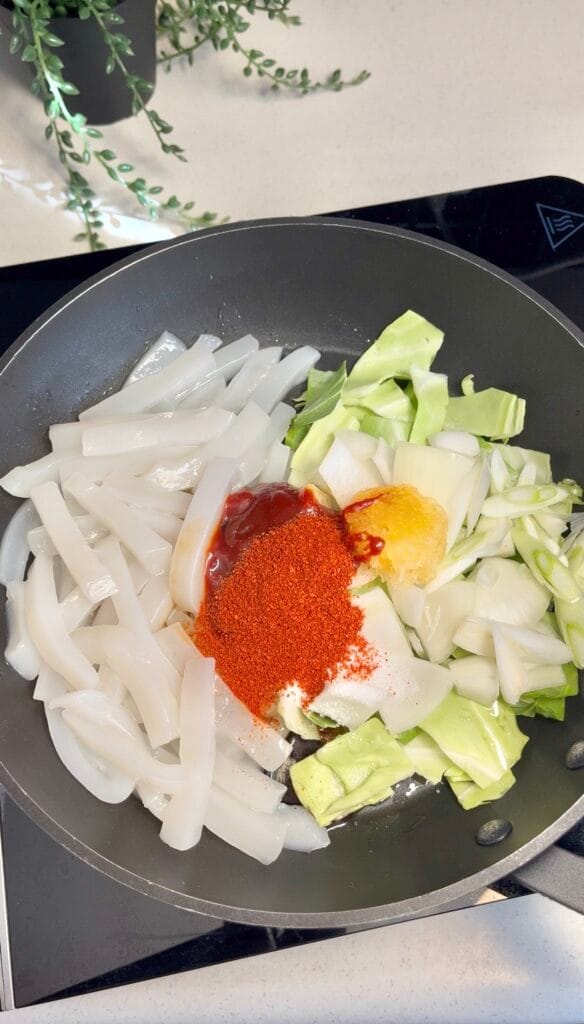
2. Start cooking
Heat 2 tbsp of cooking oil in a large, wide pan or wok over medium-high heat. Once the oil is hot and shimmering, add the squid, cabbage, onion, scallion, and minced garlic all at once directly into the pan. You don’t need to stir-fry these vigorously at this stage.
The pan will be quite full at this point and that’s completely fine. The cabbage and onion will wilt down considerably as everything cooks.
3. Add the sauce
Immediately after adding the squid and vegetables, pour in all the sauce ingredients directly into the pan, 1 tbsp gochujang, 1 tbsp light soy sauce, 1/2 tbsp sugar, 2 tbsp gochugaru, and 2/3 cup water. Give everything a brief stir to distribute the sauce through the squid and vegetables as evenly as possible, making sure the gochujang is broken up and starting to dissolve into the liquid rather than sitting in a clump.
The sauce will look very liquid and thin at this point. Don’t worry, it will reduce down into a thick, glossy, deeply flavoured coating as everything cooks.
Place the lid firmly on the pan and leave it to come up to a boil over medium-high heat. You’ll start to hear it bubbling vigorously after a couple of minutes. Once you hear that active boil under the lid, you’re right on track.
❤️ Tip: Gochugaru, Korean chilli powder, is not the same as regular chilli powder or cayenne pepper. Korean gochugaru has a bright, fruity heat that is quite different to the sharper, more pungent heat of regular chilli powder or cayenne. It’s also what gives the dish that gorgeous, vibrant deep red colour. Both gochujang and gochugaru are available at Korean grocery stores, most Asian supermarkets, and increasingly at mainstream supermarkets in the international foods aisle.
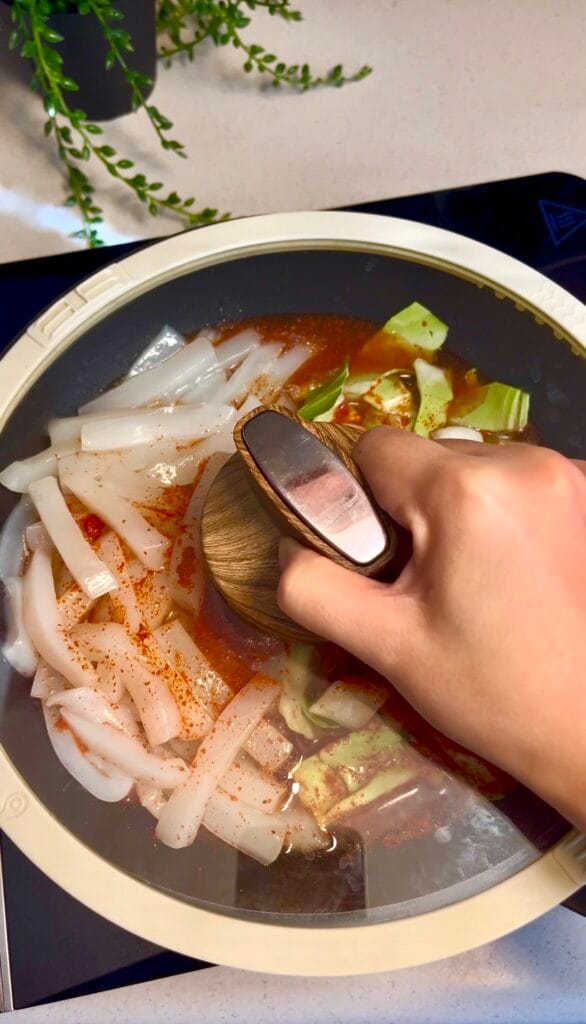
4. Simmer with the lid on
Once the sauce comes to an active boil under the lid, reduce the heat to medium and let everything simmer with the lid on for about 5-7 minutes. During this time the squid will cook through, the vegetables will soften and absorb the sauce, and the liquid will begin to reduce and concentrate. Resist the urge to lift the lid too frequently. Every time you lift it, you let steam escape and slow down the cooking process. One check at around the 5 minute mark is plenty.
At the 5-7 minute mark, lift the lid and give everything a thorough stir, making sure to scrape along the bottom of the pan where the sauce is thickest and most concentrated, and folding it through the squid and vegetables so everything gets evenly coated. The sauce should be noticeably thicker and more reduced than when you put the lid on. Put the lid back on and continue cooking for another 2-3 minutes.
❤️ Tip: The cooking time will vary slightly depending on the size of your squid pieces and the heat of your stove. Keep an eye on the sauce consistency rather than watching the clock too rigidly. You’re looking for a sauce that has reduced from a thin, liquid broth into something thick, glossy, and saucy that coats the squid and vegetables generously. If it reduces too quickly before the squid is cooked, add a small splash of water (about 2-3 tbsp) and continue cooking.
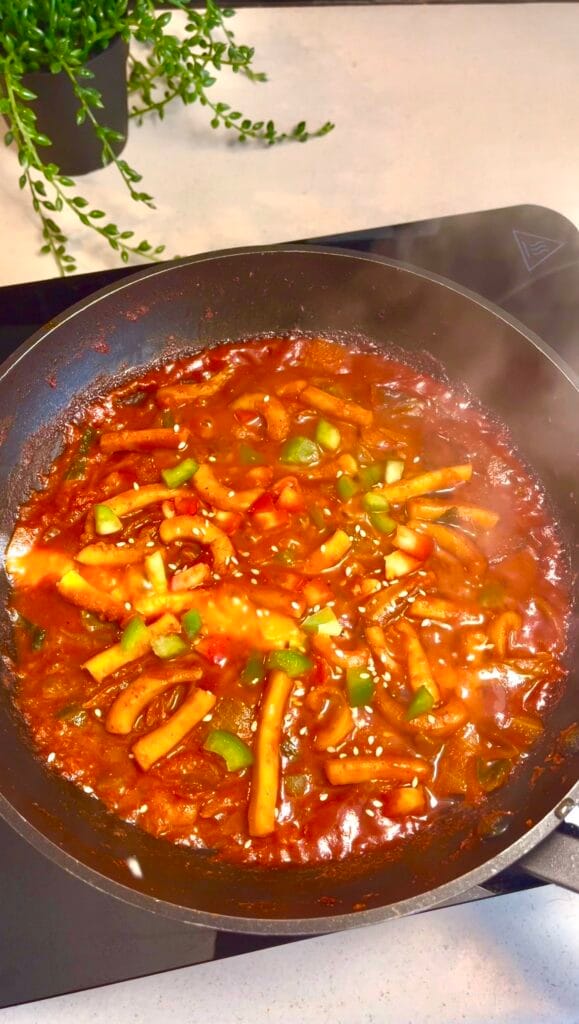
5. Final stir and finish
Once the sauce has reduced to a thick, glossy, deeply red consistency that clings beautifully to the squid and vegetables, turn off the heat. Give everything one final, thorough stir, making sure every piece of squid and every bit of vegetable is fully coated in that gorgeous sauce and nothing is sitting dry at the bottom of the pan.
The squid should be just cooked through, tender and slightly chewy with no raw translucency remaining. The cabbage should be softened but still have a little texture. The sauce should be thick, glossy, and deeply coloured.
❤️ Tip: Turn the heat off before doing your final stir rather than stirring on the heat. The residual heat in the pan is more than enough to keep everything warm while you finish the dish, and turning off the heat at this point means the squid stops cooking immediately and won’t overcook and go rubbery while you’re garnishing and plating.
6. Garnish and serve
Scatter a generous amount of thinly sliced green and red chilli or capsicum over the top. The green and red against the deep red sauce looks absolutely stunning and adds a fresh, slightly crunchy contrast. Sprinkle white sesame seeds over everything. Then finish with a generous drizzle of sesame oil all around the edge of the dish and over the top. The sesame oil adds a gorgeous nutty fragrance that lifts the whole dish and is the classic finishing touch for Korean stir-fried dishes.
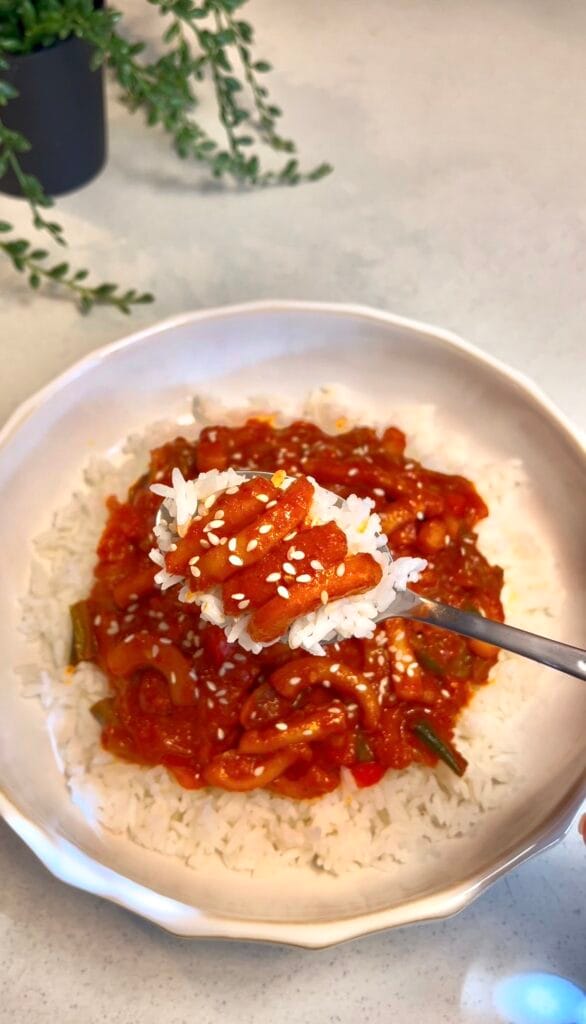
Serve immediately with steamed white rice.
❤️ Tip: Don’t skip the sesame oil finish. It is not just a garnish, it genuinely changes the flavour of the finished dish in a significant way. The nutty, fragrant warmth of sesame oil is the classic finishing note for Korean stir-fried dishes and it ties all the bold, spicy, savoury flavours together beautifully. Add it right at the very end after the heat is off. Sesame oil loses much of its fragrance if it’s cooked, so it should always be used as a finishing oil rather than a cooking oil.
Extra Tips
1. Buying and preparing squid
Fresh squid is ideal for this recipe. It has a clean, sweet flavour and a beautiful tender texture when cooked correctly. Look for squid that smells fresh and oceanic rather than fishy or ammonia-like, with firm, white flesh and clear eyes if buying whole. Frozen squid also works very well in this recipe and is often more convenient and consistently available. Just thaw it completely in cold water before cooking and pat it thoroughly dry. Most fishmongers and Asian grocery stores sell pre-cleaned squid tubes and tentacles which saves a lot of prep time and work.
2. Don’t overcook the squid
This is the single most important thing to get right in this recipe. Squid cooks very quickly and there is a very narrow window between perfectly cooked and overcooked. Perfectly cooked squid is tender, slightly chewy, and yielding. Overcooked squid is rubbery, tough, and unpleasant to eat. Watch the cooking carefully and be ready to take the pan off the heat as soon as the sauce has reduced to your liking. When in doubt, err on the side of less cooking time rather than more.
3. Adjusting the spice level
This recipe is genuinely spicy as written. That bold heat is a defining characteristic of ojingeo bokkeum and is part of what makes it so exciting and addictive. If you love heat, feel free to add an extra tbsp of gochugaru or a little more gochujang. If you’re cooking for people who are sensitive to spice, reduce the gochugaru to 1 tbsp and use a little less gochujang. You’ll still get all the gorgeous flavour and that beautiful colour with a significantly gentler heat level.
4. Serving suggestions
Ojingeo bokkeum is traditionally served over steamed white rice. The clean, neutral rice is the perfect foil for the bold, spicy, intensely flavoured squid. It’s also wonderful served alongside a bowl of doenjang jjigae (Korean fermented soybean paste stew) and a few simple banchan for a proper Korean home-cooked meal. For a simpler weeknight dinner, serve it over rice with a fried egg on top. The runny yolk breaking into the spicy sauce and rice is genuinely one of the best things you can eat on a Tuesday night.
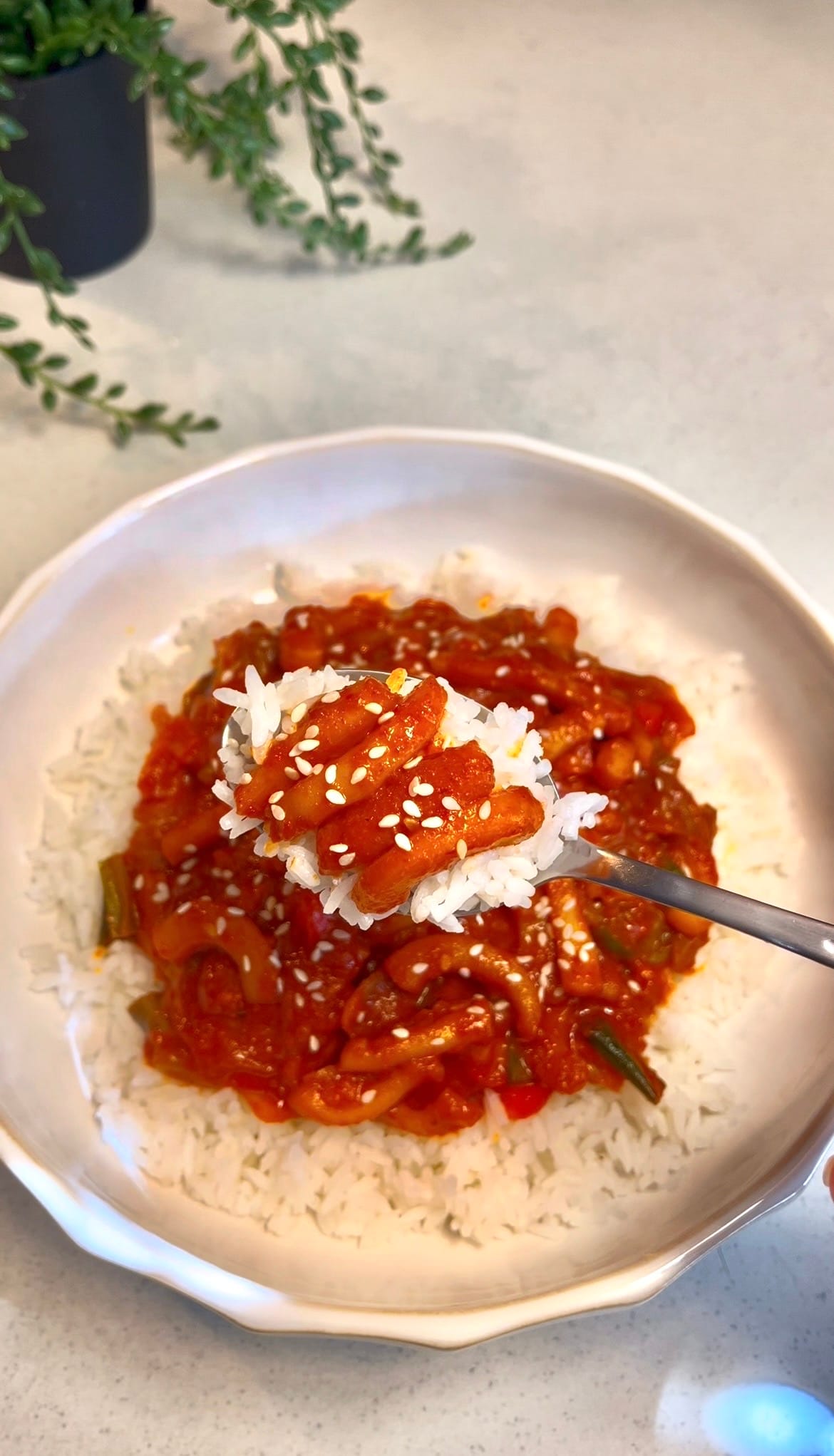
Korean Spicy Stir-fried Squid
Ingredients
For the stir-fry:
- 250 g squid
- 1/2 cup cabbage chopped
- 1/3 cup onion chopped
- 2 tbsp scallion white part only
- 1 tbsp garlic minced
- 2 tbsp cooking oil
For the sauce:
- 1 tbsp gochujang
- 1 tbsp light soy sauce
- 1/2 tbsp sugar
- 2 tbsp gochugaru Korean chilli powder or any chilli powder
- 2/3 cup water
To garnish:
- Green and red chilli or capsicum chopped
- White sesame seeds
- Sesame oil to drizzle
Instructions
- Prepare your ingredients: Clean and slice 250g squid into rings roughly 1-1.5cm thick. Pat dry thoroughly with paper towel. Roughly chop 1/2 cup cabbage and 1/3 cup onion. Cut 2 tbsp scallion white parts into 2-3cm lengths. Mince 1 tbsp garlic. Measure out all sauce ingredients and set aside.
- Start cooking: Heat 2 tbsp cooking oil in a large wide pan over medium-high heat. Add 250g squid, 1/2 cup cabbage, 1/3 cup onion, 2 tbsp scallion and 1 tbsp garlic all at once.
- Add the sauce: Pour in 1 tbsp gochujang, 1 tbsp light soy sauce, 1/2 tbsp sugar, 2 tbsp gochugaru and 2/3 cup water. Stir well to combine and break up any clumps of gochujang. Place the lid on firmly and bring to a boil over medium-high heat.
- Simmer with the lid on: Reduce heat to medium and simmer with the lid on for 5-7 minutes. At the 5-7 minute mark lift the lid, give everything a thorough stir scraping along the bottom of the pan, then replace the lid and cook for another 2-3 minutes. If the sauce reduces too quickly add 2-3 tbsp water and continue cooking.
- Final stir and finish: Once the sauce is thick, glossy and clings to the squid and vegetables, turn off the heat. Give everything one final thorough stir until fully coated.
- Garnish and serve: Scatter chopped green and red chilli or capsicum over the top. Sprinkle white sesame seeds over everything. Drizzle sesame oil generously over the top. Serve immediately with steamed white rice.
Notes
- Buying and preparing squid: Fresh squid is ideal. Frozen squid works well too. Thaw completely in cold water and pat thoroughly dry before cooking.
- Don’t overcook the squid: Squid overcooks very easily. Take the pan off the heat as soon as the sauce has reduced to your liking. When in doubt, err on the side of less cooking time.
- Adjusting the spice level: For more heat add an extra tbsp of gochugaru or more gochujang. For a milder version reduce the gochugaru to 1 tbsp. The flavour and colour will still be wonderful.
- Serving suggestions: Serve over steamed white rice. Top with a fried egg for a simple weeknight dinner. Also wonderful alongside doenjang jjigae and simple banchan for a full Korean meal.