20 Mins Chilli Oil Carbonara
If you’ve ever made a classic carbonara and thought to yourself “this is incredible, but what if it had a little more personality”, this recipe is the answer. This chilli oil carbonara takes everything that makes traditional carbonara so outrageously good and gives it a bold, fragrant, spicy twist with chilli oil, thinly sliced garlic, and spring onion. The result is one of the most satisfying bowls of pasta you will ever make at home, and it takes exactly 20 minutes from start to finish.
Like a traditional carbonara, the sauce in this recipe is built entirely from egg yolk, a whole egg, and parmesan cheese. No cream, no butter, nothing else. When this mixture comes into contact with the hot pasta and a little pasta water, something almost magical happens. The eggs gently cook from the residual heat of the pasta, the parmesan melts in, and the starchy pasta water acts as an emulsifier that binds everything together into the most silky, glossy, coating sauce you’ve ever seen. It sounds like it should be complicated, but the technique is actually very straightforward once you understand the principles behind it.
I make this on nights when I want something that feels genuinely indulgent but I have very little time and even less energy. Twenty minutes is all it takes, and the ingredient list is short enough that I almost always have everything on hand. It’s the kind of recipe that makes you feel like a proper cook without any of the effort that usually implies.
One thing to be aware of before you start: the step where you combine the egg mixture with the hot pasta is the technique that needs a little attention. The goal is a smooth, silky sauce, not scrambled eggs. The way you achieve this is by removing the pan from the heat before adding the egg mixture, by keeping the pasta moving constantly as you toss, and by adding pasta water gradually rather than all at once. The pasta water is not optional and it cannot be skipped. The starch in it is what makes the sauce emulsify into something silky and coating rather than greasy and broken. Once you’ve done this once, it will feel completely natural. Trust the process, keep the pasta moving, and the sauce will come together beautifully.
Right. Let’s make some pasta.
Ingredients
- 80g pasta
- 1 egg yolk
- 1 whole egg
- 1/4 cup parmesan cheese, grated
- 1 1/2 tbsp extra virgin olive oil
- 1 tbsp chilli oil (plus extra to drizzle)
- 1 tbsp garlic, thinly sliced
- 1 tbsp spring onion, chopped
- 1 cup pasta water, reserved before draining
- Salt to taste
Instructions
1. Cook the pasta
Fill a large pot with water and bring it to a rolling boil over high heat. Add a generous pinch of salt. The water should taste properly seasoned, almost like very mild seawater. Salting the pasta water is the only opportunity you have to season the pasta itself from the inside out, and well-seasoned pasta makes a real difference to how the finished dish tastes.
Add 80g of pasta and cook according to the packet instructions until just al dente. The pasta will continue cooking briefly from the residual heat of the pan once it’s tossed with the sauce, so you want to pull it just slightly before it’s completely done to avoid it going soft and overcooked in the final dish.
Scoop out at least 1 cup of pasta cooking water and set it aside in a heatproof mug or bowl. Do this while the pasta is still in the pot. This starchy cooking water is absolutely essential to the finished sauce and there is no substitute for it. The starch released by the pasta as it cooks is what allows the egg and parmesan mixture to emulsify into a smooth, silky, flowing sauce. Plain water simply does not have this property and will not give you the same result. Once you’ve got your pasta water safely set aside, drain the pasta and set it aside.
2. Prepare the egg and parmesan mixture
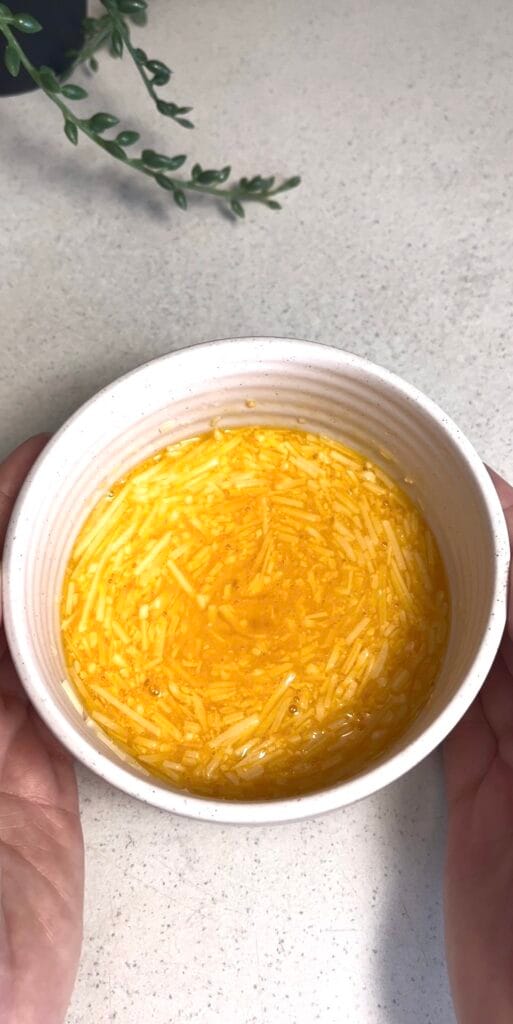
While cooking the pasta, crack 1 egg yolk and 1 whole egg into a medium bowl. Whisk them together thoroughly until completely combined and uniform in colour. No streaks of egg white should remain. Then add 1/4 cup of finely grated parmesan cheese and whisk it through until fully incorporated. The mixture should look thick, slightly pale, and smooth with no lumps of cheese remaining.
❤️ Tip: Grate your parmesan as finely as possible. Finely grated parmesan dissolves smoothly and evenly into the egg mixture and then into the sauce, whereas coarsely grated parmesan can stay in lumps and create a grainy sauce texture rather than the silky smooth coating you’re aiming for. It’s a small thing that makes a genuinely noticeable difference to the finished dish.
3. Sauté the garlic and spring onion
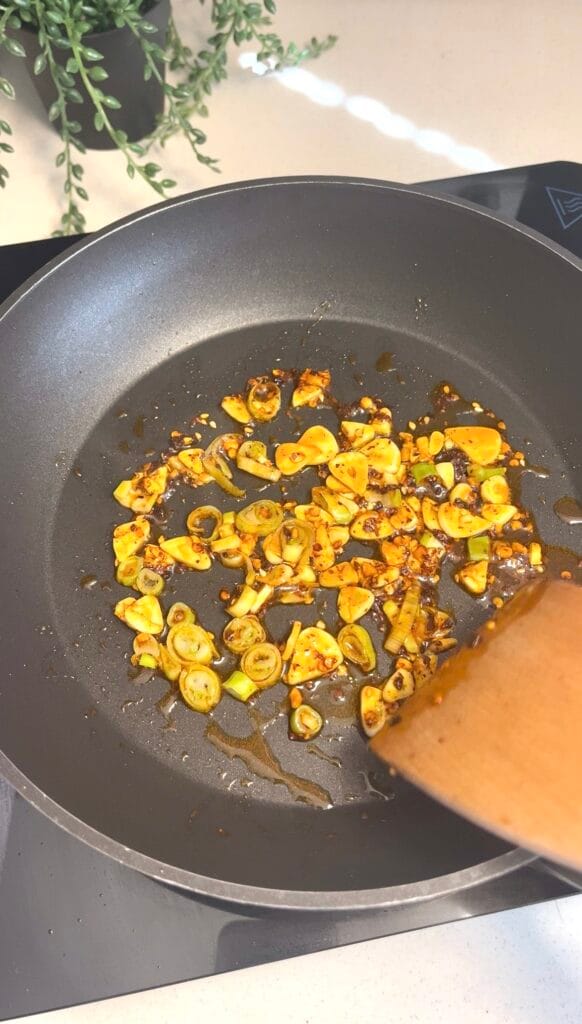
Heat 1 1/2 tbsp extra virgin olive oil and 1 tbsp chilli oil in a large wide pan or skillet over medium heat. Once the oil is warm and shimmering, add 1 tbsp of thinly sliced garlic and 1 tbsp of finely chopped spring onion. Reduce the heat to medium-low and sauté gently and stir frequently. You’re watching for the garlic slices to become tender and just barely golden at the very edges, and for the spring onion to soften and become fragrant. The garlic should look translucent and lightly golden, not brown or dark.
The pan will smell absolutely extraordinary at this point. That combination of chilli oil, toasting garlic, and softening spring onion is one of the most deeply appetising smells in cooking. Enjoy it.
4. Combine the pasta and egg mixture
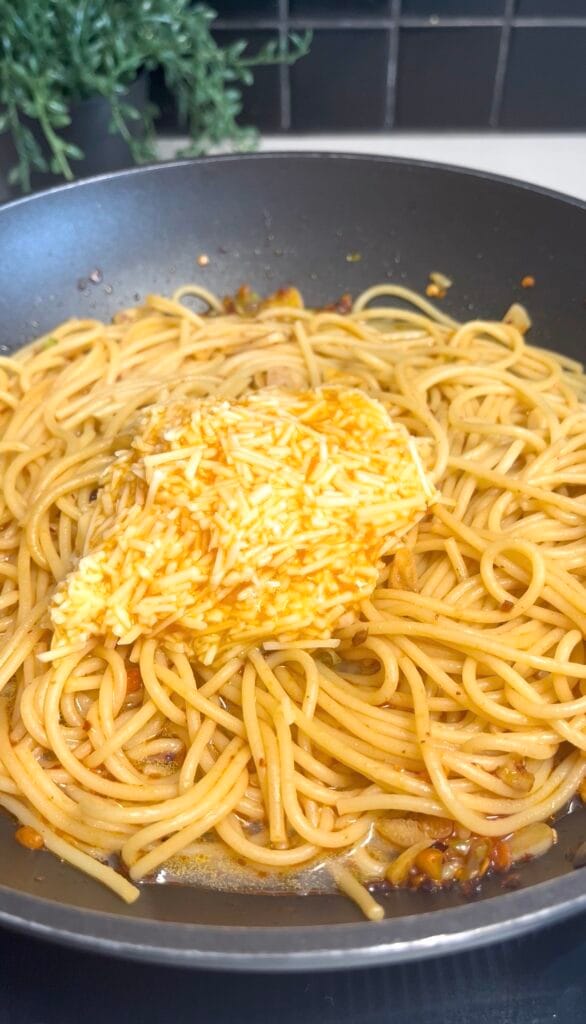
Remove the pan from the heat completely, or turn it down to the absolute lowest setting your stove has. The pan needs to be off direct high heat when the egg mixture goes in. Residual heat and the heat of the pasta itself is all you need to cook the eggs gently into a sauce. High heat at this point is what causes scrambling.
Add the cooked pasta directly into the pan with the chilli oil and aromatics. Toss well with tongs to coat every strand thoroughly in the oil and get the garlic and spring onion evenly distributed through the pasta. Then immediately pour the egg and parmesan mixture over the pasta all at once. Working quickly and confidently, toss everything together continuously and vigorously. keep the pasta moving at all times using tongs or two forks. As you toss, add pasta water in small splashes. Start with about 2–3 tbsp and toss it through before adding more. The pasta water does two crucial things simultaneously: it cools the egg mixture just enough to prevent it from scrambling, and it helps emulsify everything into that silky, flowing, glossy sauce.
Keep tossing and adding pasta water a little at a time until the sauce reaches the consistency you’re happy with. Depending on how your pasta absorbed the oil and how hot your pan is, you might use anywhere from a few tablespoons to around half a cup of pasta water. Just keep adding a splash at a time, tossing, looking, and adding more as needed.
Once the sauce looks perfect, taste it and add salt if needed. Keep in mind that parmesan and chilli oil are both quite salty, so you may need very little or even none at all.
❤️ Tip: Constant movement is the absolute key to this step. The moment the pasta stops moving is the moment the egg mixture starts to set on the hot surface of the pan rather than staying in a smooth sauce. Toss continuously and with real energy throughout this entire step. It only takes about a minute of active tossing for the sauce to come together, so commit to it fully for that short time. If the sauce ever starts looking like it might be scrambling slightly, immediately add a generous splash of pasta water and toss hard. It will usually come back together beautifully.
5. Plate and finish
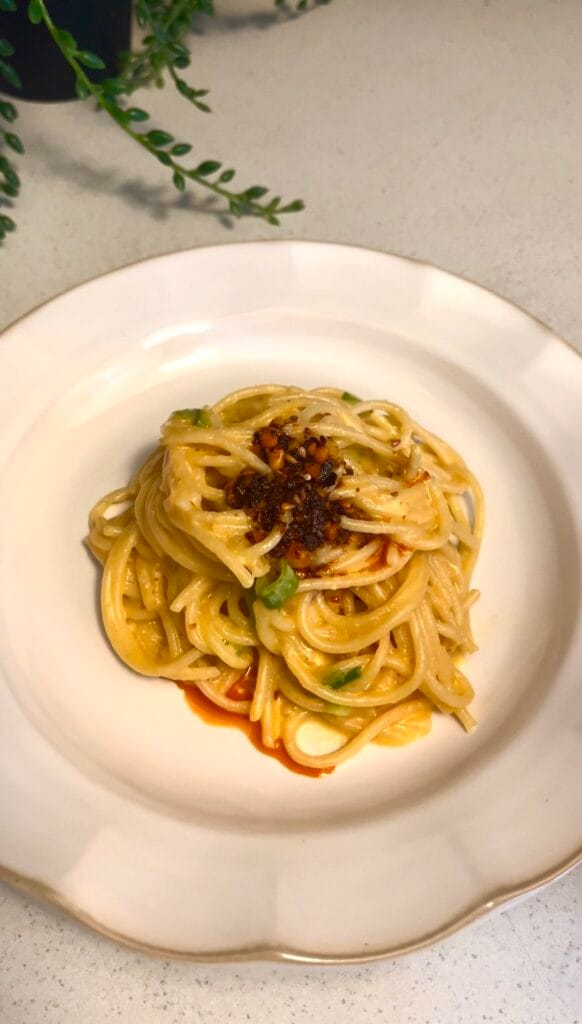
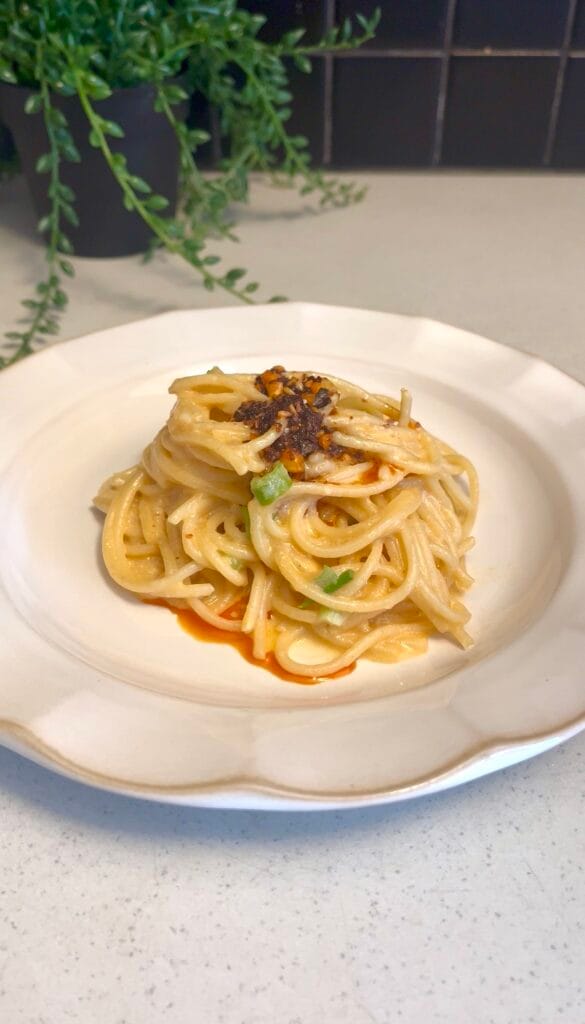
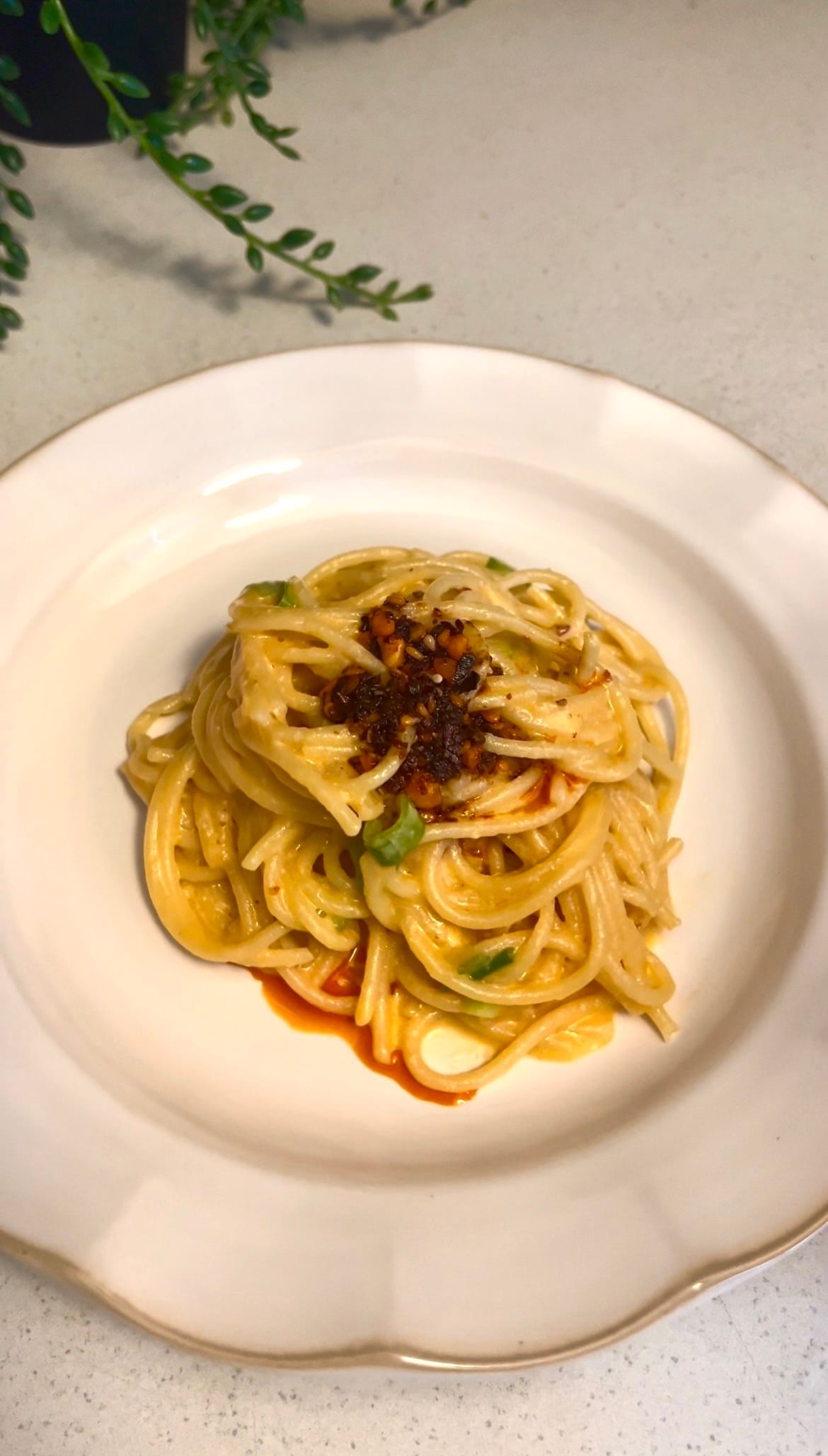
Using tongs, twirl the pasta into a bowl in a high, elegant mound. Gather a good amount of pasta on the tongs, hold them above the bowl, and rotate to create a nest shape. Spoon any remaining sauce from the pan over the top.
Add more chilli oil or scatter over a little extra finely grated parmesan if you like. Serve immediately.
Extra Tips
1. Nail the sauce
The carbonara-style sauce in this recipe works through gentle heat and emulsification. The egg proteins cook slowly from the residual heat of the pasta and the pan, while the starch in the pasta water binds everything together into a smooth coating rather than letting the eggs set into solid pieces. The three rules are: no direct high heat when adding the egg mixture, keep tossing constantly, and add pasta water gradually. Follow those three rules and your sauce will be silky and perfect every single time.
2. Use both egg yolk and whole egg
Using a combination of one egg yolk and one whole egg gives you the best of both worlds in terms of texture and richness. Using only yolks makes the sauce very rich and quite thick. Using only whole eggs makes it slightly less glossy and rich. The combination gives you a sauce that is gloriously silky, rich enough to feel indulgent, but light enough to eat a whole bowl of without feeling heavy.
3. Use the pasta water
The starchy pasta water is genuinely the secret weapon of this recipe and of carbonara in general. It is not optional, it cannot be substituted, and you need to scoop it out before you drain the pasta. The starch content of pasta water varies depending on how much pasta you cook and how long you cook it .Water from a small amount of pasta like 80g will be less starchy than water from a larger batch. If you feel like your pasta water isn’t very starchy, cook the pasta in a smaller amount of water than usual to concentrate the starch content.
4. Make your own version
This recipe as written makes a perfectly satisfying single serve, but it’s easy to make more hearty. Crispy bacon or pancetta cooked in the pan before the garlic and spring onion adds a smoky, salty element that is absolutely incredible with the chilli oil and parmesan. Sautéed mushrooms add earthiness and body. A soft poached egg or a fried egg with a runny yolk placed on top of the finished pasta and broken into the sauce at the table is outrageously good. The extra yolk makes the sauce even richer and more glossy. A small handful of baby spinach or rocket stirred through at the very end adds colour and a fresh note that cuts through the richness beautifully.
20 Mins Chilli Oil Carbonara
Ingredients
- 80 g pasta
- 1 egg yolk
- 1 whole egg
- 1/4 cup parmesan cheese grated
- 1 1/2 tbsp extra virgin olive oil
- 1 tbsp chilli oil plus extra to drizzle
- 1 tbsp garlic thinly sliced
- 1 tbsp spring onion chopped
- 1 cup pasta water reserved before draining
- Salt to taste
Instructions
- Cook the pasta: Bring a large pot of well-salted water to a rolling boil. Add 80g pasta and cook until just al dente according to packet instructions. Before draining, scoop out at least 1 cup of pasta water and set aside in a heatproof mug. Drain the pasta and set aside.
- Prepare the egg and parmesan mixture: While the pasta cooks, whisk together 1 egg yolk and 1 whole egg in a medium bowl until fully combined with no streaks of white remaining. Add 1/4 cup finely grated parmesan cheese and whisk until smooth and fully incorporated.
- Sauté the garlic and spring onion: Heat 1 1/2 tbsp extra virgin olive oil and 1 tbsp chilli oil together in a large wide pan over medium heat. Once shimmering, add 1 tbsp thinly sliced garlic and 1 tbsp finely chopped spring onion. Reduce to medium-low and sauté, stirring frequently, until fragrant. Do not let the garlic brown or burn.
- Combine the pasta and egg mixture: Remove the pan from the heat completely or turn to the lowest setting. Add the cooked pasta and pour the egg and parmesan mixture over the pasta. Toss continuously and vigorously with tongs, adding pasta water in small splashes of 2–3 tbsp at a time, tossing between each addition, until the sauce is silky, glossy, and coats the pasta beautifully. Taste and add salt if needed.
- Plate and finish: Twirl the pasta into a bowl using tongs to form a high, neat mound. Spoon over any remaining sauce from the pan. Drizzle generously with extra chilli oil and scatter over extra parmesan if desired. Serve immediately.
Notes
- Nail the sauce: No direct high heat when adding the egg mixture, keep tossing constantly, and add pasta water gradually. Follow those three rules and the sauce will be silky and perfect every single time.
- Use both egg yolk and whole egg: The egg yolk gives richness and gloss. The whole egg adds body and a lighter texture. Together they give a sauce that is silky and indulgent without feeling too heavy.
- Use the pasta water: The starchy pasta water emulsifies the sauce and cannot be substituted with plain water. For a more starchy result, cook 80g pasta in a smaller amount of water than usual to concentrate the starch content.
- Make your own version: Add crispy bacon or pancetta to the pan before the garlic for a smoky, salty element. Sautéed mushrooms add earthiness. A fried egg with a runny yolk on top makes the sauce even richer. A handful of baby spinach or rocket stirred through at the end adds freshness and colour.