20 Min Cheese Tteokbokki
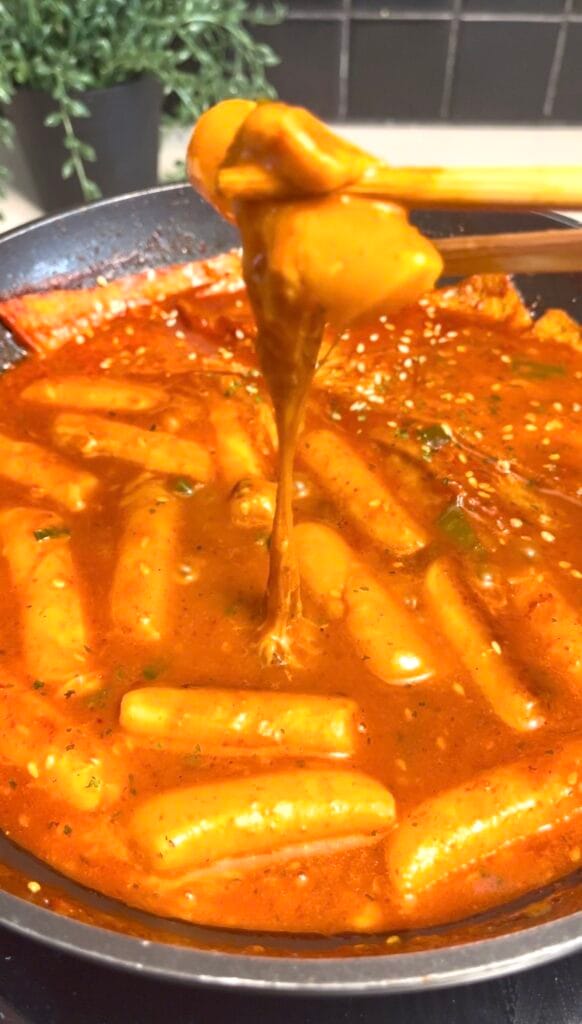
If you’ve ever scrolled through Korean street food videos online and found yourself completely mesmerised by that iconic shot of glossy red tteokbokki being lifted from a bubbling pan with strings of melted mozzarella stretching dramatically behind it, you are in exactly the right place, because today we are making that at home and it is every bit as good as it looks.
Tteokbokki is one of Korea’s most beloved and iconic street foods, and for very good reason. It’s the kind of dish that’s deeply comforting, genuinely exciting to eat, and completely impossible to stop eating once you’ve started. The chewy, bouncy rice cakes soak up the most incredible spicy, slightly sweet, deeply savoury sauce, and when you pile mozzarella cheese over the top and let it melt into a gooey, stretchy blanket over everything. That’s when it goes from really good to genuinely unforgettable.
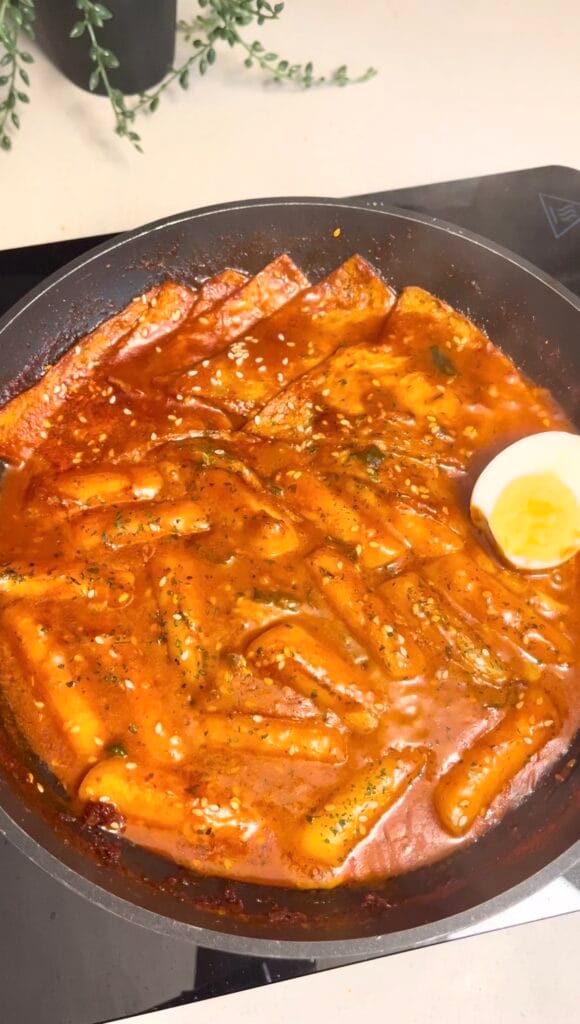
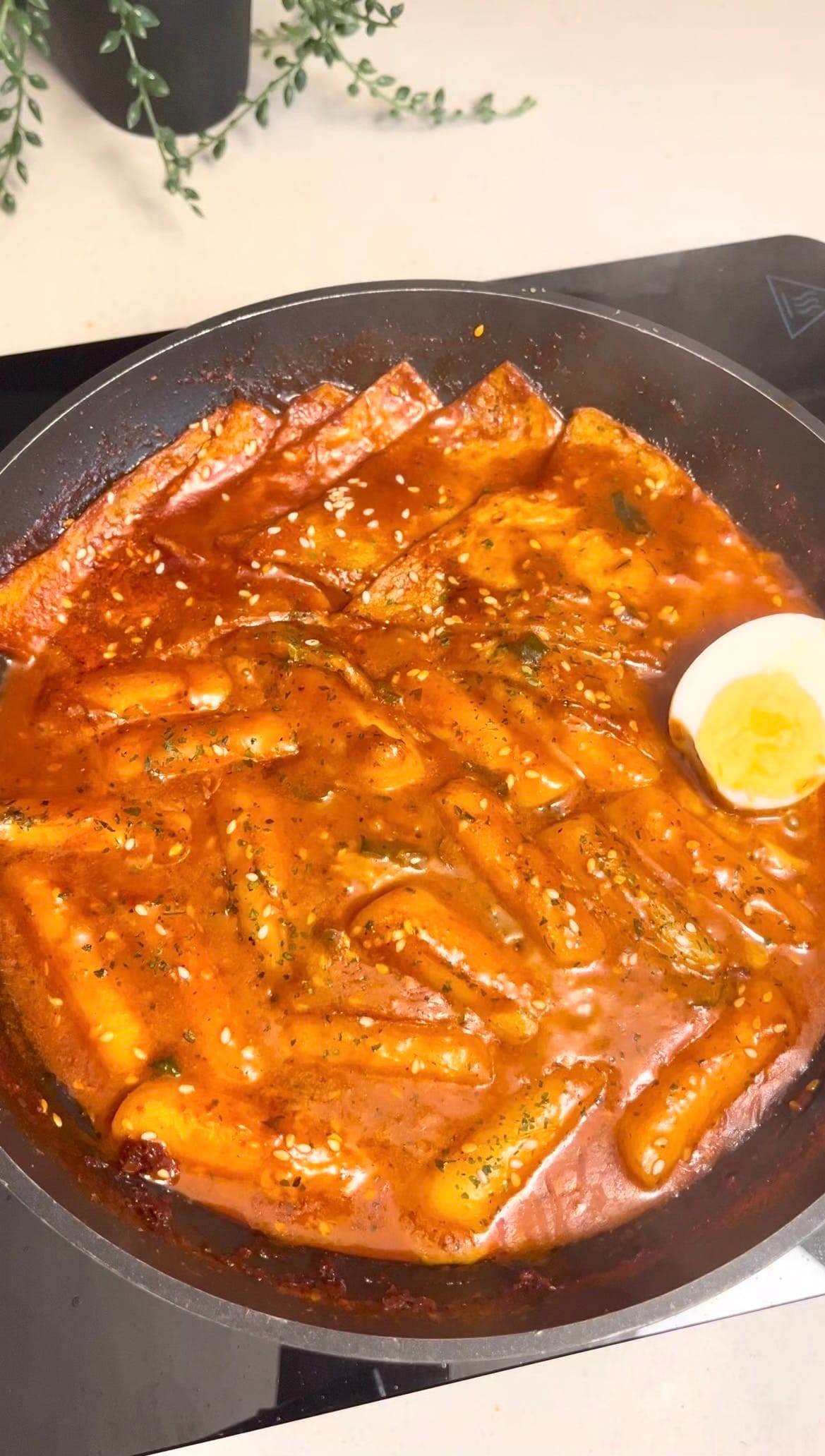
This recipe is my go-to version of tteokbokki which is the one I come back to again and again. The sauce is built from a combination of gochujang and fine gochugaru, which gives it that beautiful deep red colour and layered chilli flavour, balanced with a touch of sugar and soy sauce for sweetness and depth. I use beef dasida stock powder to give the sauce a rich, savoury backbone that makes it taste like it’s been simmering for hours even though it hasn’t. The fish cakes add another layer of flavour and that classic Korean street food character, the boiled egg soaks up all the sauce and is absolutely divine, and the cheese. Oh, the cheese. Piled high, melted low and slow until it’s completely gooey and golden at the edges. It’s everything.
This is the kind of recipe that will make you feel like you’re eating your way through Korean night market on a cold evening. Let’s get into it.
Ingredients
Main ingredients:
- 250g rice cakes
- 2 slices fish cake
- 2 tbsp spring onion
- 1 boiled egg, peeled and halved
- Mozzarella cheese, as much as you like
For the sauce:
- 2 tbsp cooking oil
- 1 1/2 cups water
- 1 tbsp sugar
- 1 tbsp fine gochugaru (Korean fine chilli powder)
- 1/2 tbsp beef dasida stock powder
- 1 tbsp light soy sauce
- 1 1/2 tbsp gochujang (Korean red chilli paste)
To finish:
- Dried parsley
- White sesame seeds
Instructions
1. Prepare your ingredients
Before you turn on the stove, get everything ready so the cooking process goes smoothly. If you’re using frozen rice cakes, thaw them in a bowl of cold water until they’re completely softened and separated before you start.
Cut your fish cake slices into bite-sized pieces. Rectangular strips or diagonal cuts both work well and look great in the finished dish. Roughly chop your spring onion. Peel your boiled egg and set it aside whole for now. You’ll halve it at the very end just before serving so the cut face stays clean and pretty. Have your mozzarella ready to go next to the stove so you’re not scrambling to open a packet when the rice cakes are ready.
Measure out all your sauce ingredients. The sugar, fine gochugaru, beef dasida stock powder, light soy sauce, and gochujang and set them alongside the stove so you can add them quickly and efficiently once the cooking starts.
❤️ Tip: If your rice cakes are stuck together in a clump, don’t try to force them apart when they’re cold as they can break. Instead, soak them in a bowl of cold water for 10–15 minutes and they’ll separate easily and gently on their own. This also helps them cook more evenly as they won’t be in a solid mass when they go into the pan.
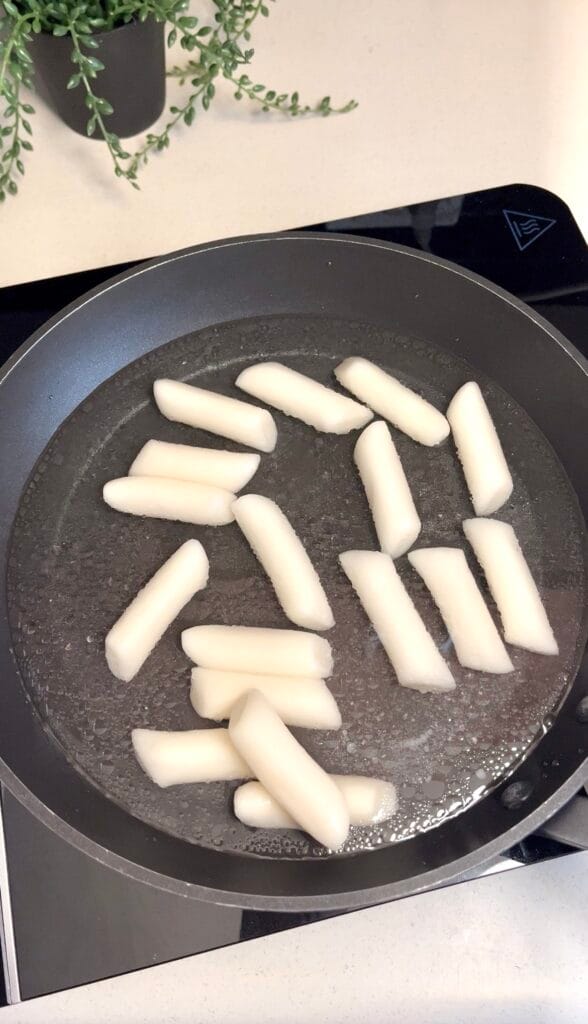
2. Start the sauce base
Heat 2 tbsp of cooking oil in a wide, deep pan or skillet over medium heat. You want a pan that’s large enough to hold all the rice cakes in a relatively even layer with a bit of room for stirring. A crowded pan makes it harder to keep everything moving and increases the risk of the rice cakes sticking and burning on the bottom.
Then, add your 250g rice cakes and pour in 1 1/2 cups of water. Then add 1 tbsp sugar, 1 tbsp fine gochugaru, 1/2 tbsp beef dasida stock powder, 1 tbsp light soy sauce, and 1 1/2 tbsp gochujang. Stir everything together well until the gochujang is fully dissolved and the sauce is a uniform, deep red colour with no streaks or lumps of paste remaining. The sauce will look quite thin and liquid at this stage. That’s completely normal and exactly right, as it will reduce and thicken as everything cooks.
❤️ Tip: Take a moment to taste the sauce at this point before adding the rice cakes. This is the easiest time to adjust the balance — if you want it sweeter, add a little more sugar. If you want it saltier, add a touch more soy sauce. If you want it spicier, add a little more gochujang or gochugaru. Getting the balance right at this stage means the finished dish will taste exactly the way you want it to.
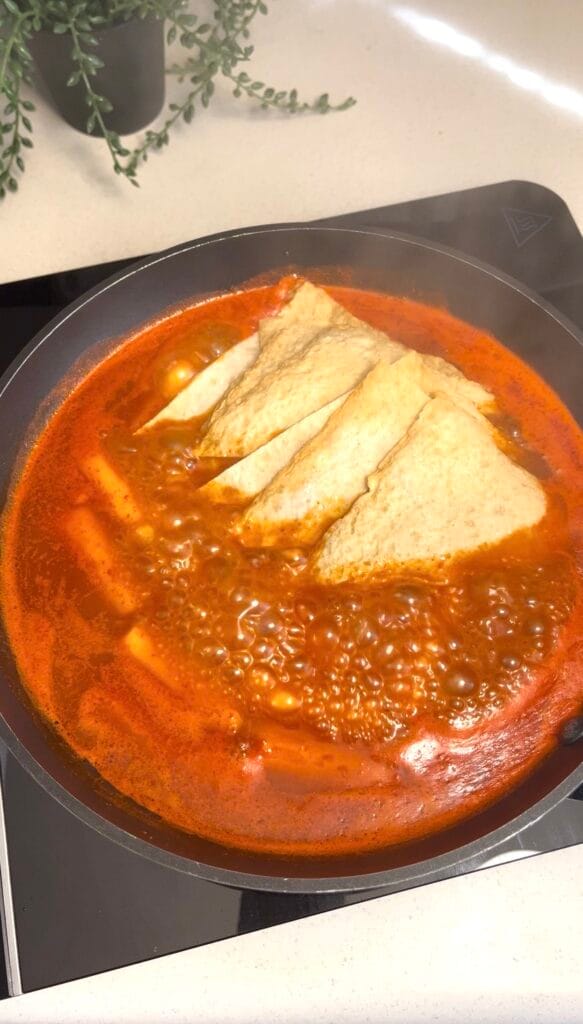
3. Add the fish cake
Add 2 slices of fish cake (cut into pieces) directly into the sauce. Stir gently to make sure everything is submerged in the sauce and coated well. Then, place the lid on the pan. Stir every 2–3 minutes to prevent the rice cakes from sticking to the bottom of the pan.
The rice cakes will gradually absorb the sauce and become softer and more pillowy as they cook. The sauce will start to thicken and become glossier as it reduces. Keep the heat at medium. You want a steady, active simmer rather than a hard rolling boil, which can cause the sauce to reduce too quickly or the rice cakes to break apart.
The rice cakes are ready when they are soft and chewy all the way through with no hard or chalky centre when you bite into one. The sauce should be thick enough to coat the rice cakes generously and cling to them rather than running off.
❤️ Tip: Stir the rice cakes regularly throughout cooking. They have a tendency to sink to the bottom and stick if left undisturbed for too long. If the sauce is thickening too quickly or looks like it’s starting to catch on the bottom before the rice cakes are cooked through, add a splash more water (about 2–3 tbsp at a time) and stir it through to loosen things up.
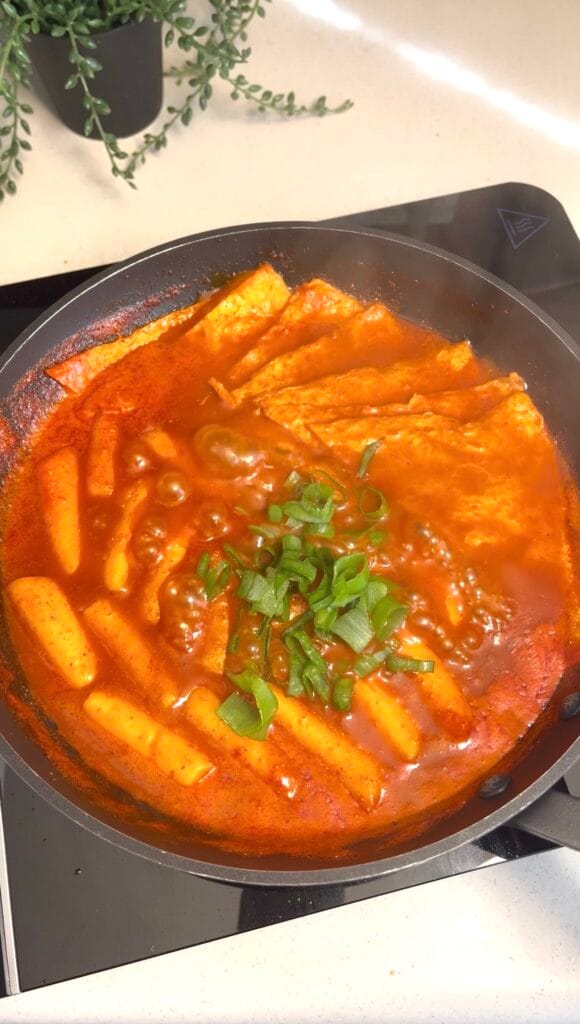
4. Add the spring onion
Once the rice cakes are cooked through and the sauce has reduced to a gorgeous, thick, glossy consistency, add 2 tbsp of roughly chopped spring onion directly into the pan. Stir everything together well so the spring onion is evenly distributed throughout the rice cakes and sauce. The spring onion will wilt slightly from the residual heat of the dish and adds a lovely fresh, mild onion flavour that lifts and brightens the rich, spicy sauce beautifully.
Take one final taste at this point and adjust the seasoning if needed. A touch more sugar if it needs balance, a little more soy sauce if it needs salt, or a pinch more gochugaru if you want to dial up the heat.
❤️ Tip: Don’t add the spring onion too early in the cooking process. Adding it at the very end preserves some of its fresh flavour and colour. Spring onion that goes in at the beginning will become completely soft and flavourless by the time the dish is done. Adding it at the end means you get both the flavour and a pop of fresh green colour in the finished dish.
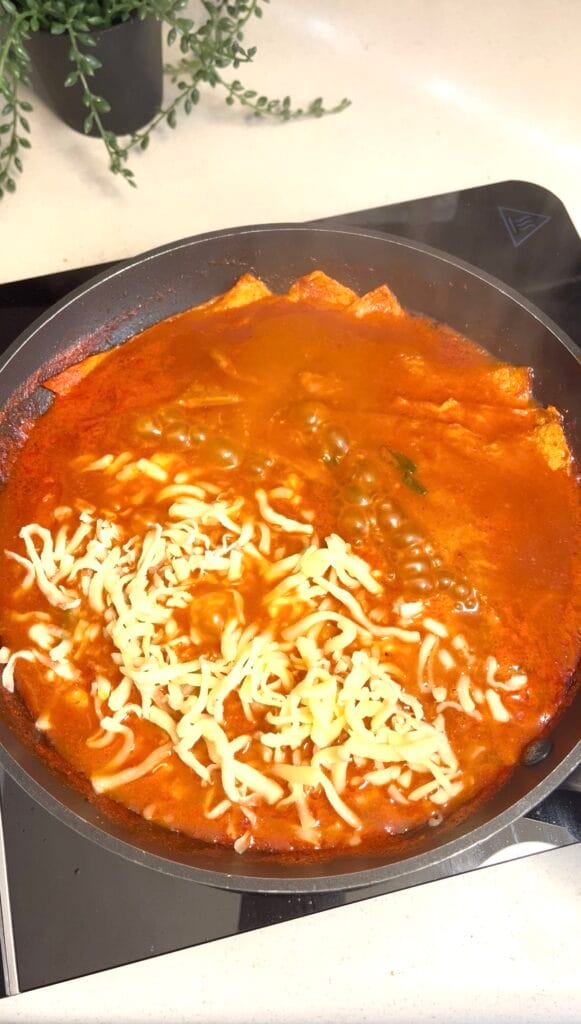
5. Add the cheese and melt
This is the step everyone has been waiting for. Take your mozzarella and pile it generously over the top of the rice cakes. The more cheese, the better the stretch and the more spectacular the finished dish looks. Cover the entire surface of the rice cakes with a thick, even layer of mozzarella.
Place the lid back on the pan and turn the heat down to the lowest setting possible. Let the cheese melt slowly and gently. Resist the urge to lift the lid and check on it every 30 seconds. The steam trapped inside the pan is what melts the cheese evenly and gives you that gorgeous, uniform gooey layer. You’ll know it’s ready when you lift the lid and see a completely melted, slightly golden, irresistibly stretchy blanket of cheese covering the entire surface.
❤️ Tip: Low and slow is the key to perfect melted cheese. High heat will melt the cheese too quickly and can make it rubbery or cause it to separate and become greasy rather than smooth and stretchy. Be patient, keep the heat low, and let the steam do the work. The result will be worth the wait every single time.
6. Garnish and serve
Take your halved boiled egg and nestle the two halves into the cheese and rice cakes. Press them in gently so they sit upright with the yolk facing up. The egg looks absolutely stunning against the red sauce and white cheese, and it adds a lovely richness and protein to the dish. Scatter a generous pinch of dried parsley and white sesame seeds over the top for that final finishing touch.
Serve straight from the pan immediately. Tteokbokki waits for no one and it’s at its absolute best the moment the cheese comes off the heat while everything is still piping hot, the sauce is glossy and thick, and the cheese is at peak stretch.
Extra Tips
1. Where to buy the ingredients
Most of the key ingredients in this recipe, such as gochujang, gochugaru, rice cakes, fish cakes, and beef dasida stock powder, are available at Korean grocery stores and most Asian supermarkets. Many large mainstream supermarkets are now also starting to stock gochujang and rice cakes in the international foods aisle. If you’re struggling to find beef dasida specifically, any Korean grocery store will definitely have it. It’s worth tracking down as it adds a really unique depth of flavour that’s hard to replicate with anything else.
2. Fresh vs. frozen rice cakes
Fresh rice cakes give the best texture. They’re already soft and pliable and cook beautifully. However, frozen rice cakes work perfectly well too, as long as you thaw them fully before cooking. Soak frozen rice cakes in cold water until they’re completely soft and separated, then drain well before adding to the pan. Never add frozen rice cakes directly to the sauce as they’ll take too long to cook through and can make the sauce watery as they release excess water.
3. Variations and additions
Tteokbokki is a wonderfully versatile dish that welcomes all sorts of additions. Sliced cabbage can be added with the rice cakes for extra vegetables. A drizzle of sesame oil stirred through at the very end adds a gorgeous nutty fragrance.
4. Leftovers and storage
Tteokbokki is absolutely best eaten fresh and hot straight from the pan. The rice cakes firm up and become chewy in an unpleasant way as they cool, and the sauce thickens considerably. That said, leftovers can be stored in an airtight container in the fridge for up to 2 days. To reheat, add a good splash of water to the pan and warm over low heat, stirring gently until the sauce has loosened and the rice cakes are soft and heated through again. Add fresh cheese on top and re-melt if you want the full cheesy experience again.
Ingredients
Main ingredients:
- 250 g rice cakes
- 2 slices fish cake
- 2 tbsp spring onion
- 1 boiled egg peeled and halved
- Mozzarella cheese as much as you like
For the sauce:
- 2 tbsp cooking oil
- 1 1/2 cups water
- 1 tbsp sugar
- 1 tbsp fine gochugaru Korean fine chilli powder
- 1/2 tbsp beef dasida stock powder
- 1 tbsp light soy sauce
- 1 1/2 tbsp gochujang Korean red chilli paste
To finish:
- Dried parsley
- White sesame seeds
Instructions
- Prepare your ingredients: If using frozen rice cakes, soak in cold water until fully thawed and separated. Cut 2 slices fish cake into bite-sized pieces. Roughly chop 2 tbsp spring onion. Peel the boiled egg and set aside whole. Measure out 1 tbsp sugar, 1 tbsp fine gochugaru, 1/2 tbsp beef dasida stock powder, 1 tbsp light soy sauce, and 1 1/2 tbsp gochujang and set alongside the stove.
- Start the sauce base: Heat 2 tbsp cooking oil in a wide, deep pan over medium heat. Add 250g rice cakes and pour in 1 1/2 cups water. Add 1 tbsp sugar, 1 tbsp fine gochugaru, 1/2 tbsp beef dasida stock powder, 1 tbsp light soy sauce, and 1 1/2 tbsp gochujang. Stir well until the gochujang is fully dissolved and the sauce is a uniform deep red with no lumps remaining.
- Add the fish cake: Add the fish cake pieces into the sauce and stir to coat. Place the lid on the pan and cook over medium heat, stirring every 2–3 minutes, until the rice cakes are soft and chewy all the way through with no hard centre and the sauce is thick and glossy. If the sauce thickens too quickly, add 2–3 tbsp water at a time to loosen.
- Add the spring onion: Once the rice cakes are cooked through and the sauce is thick and glossy, add 2 tbsp roughly chopped spring onion and stir through well. Taste and adjust seasoning.
- Add the cheese and melt: Pile mozzarella cheese generously over the entire surface of the rice cakes. Place the lid back on, turn the heat to the lowest setting, and let the cheese melt slowly until completely gooey and stretchy. Do not lift the lid during this time.
- Garnish and serve: Nestle the 2 boiled egg halves yolk-side up into the cheese. Scatter dried parsley and white sesame seeds over the top. Serve immediately straight from the pan.
Notes
- Where to buy the ingredients: Gochujang, gochugaru, rice cakes, fish cakes, and beef dasida stock powder are available at Korean grocery stores and most Asian supermarkets. Many large mainstream supermarkets now stock gochujang and rice cakes in the international foods aisle.
- Fresh vs. frozen rice cakes: Fresh rice cakes give the best texture. Frozen rice cakes work well too. Soak in cold water until completely soft and separated before using. Never add frozen rice cakes directly to the sauce as they release excess water and take too long to cook through.
- Variations and additions: Sliced cabbage can be added with the rice cakes for extra vegetables. A drizzle of sesame oil stirred through at the very end adds a gorgeous nutty fragrance.
- Leftovers and storage: Best eaten fresh straight from the pan. Leftovers keep in an airtight container in the fridge for up to 2 days. Reheat in a pan with a good splash of water over low heat, stirring gently until the sauce loosens and the rice cakes are soft again. Add fresh cheese on top and re-melt for the full experience.