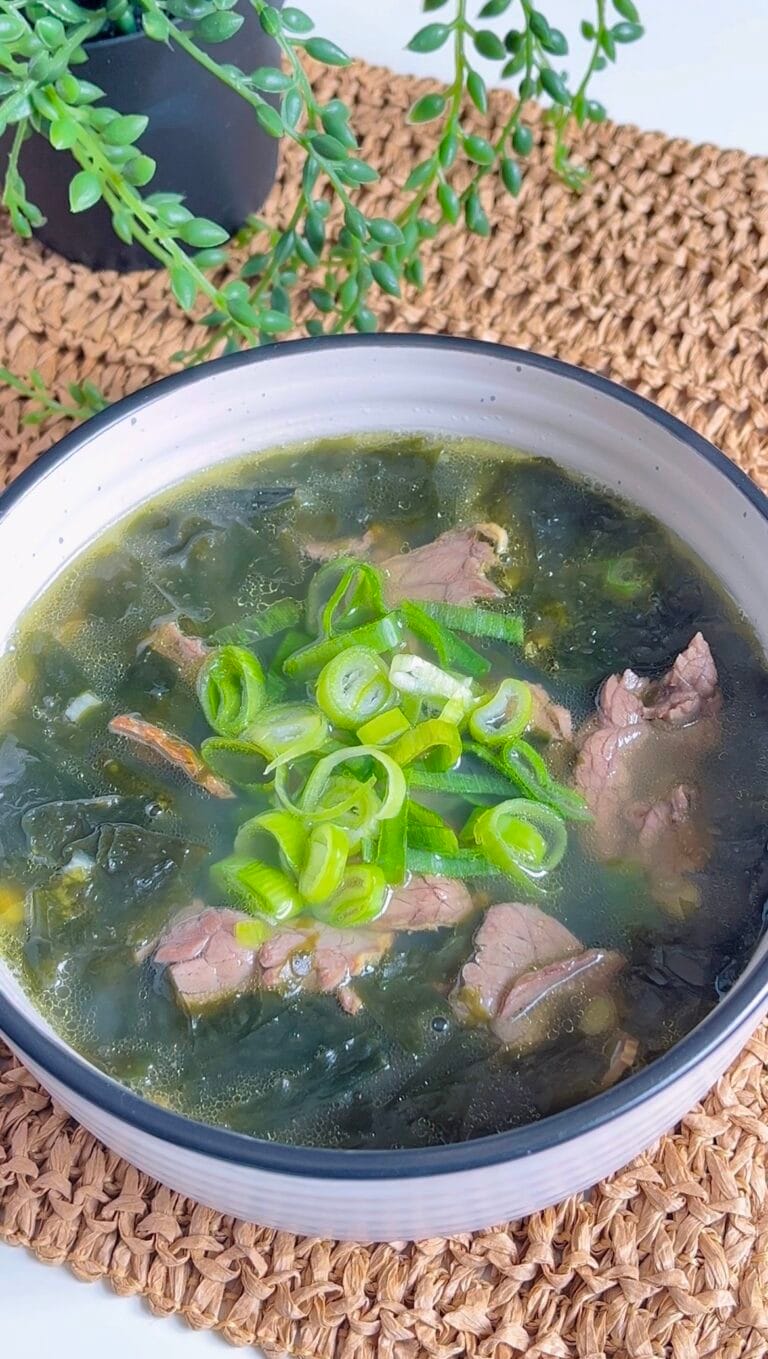
Japanese Salt and Spring Onion Beef Rice Bowl
If you’ve ever been to a Japanese yakiniku restaurant and found yourself completely unable to stop spooning that bright green, garlicky, sesame-fragrant sauce over everything on the table, you’ve already met negi shio. And today we’re making it at home.
Negi shio translates literally from Japanese as “spring onion salt.” The word “negi” refers to spring onion and “shio” simply means salt. It is one of the most iconic sauces in Japanese yakiniku culture, where small cuts of meat are grilled over charcoal at the table and served with a variety of dipping sauces. Negi shio is beloved for its clean, fresh, restrained flavour that cuts beautifully through the richness of grilled beef. No complicated ingredients, no heavy seasoning. Just spring onion, garlic, sesame oil, salt and pepper working together into something far greater than the sum of its parts.
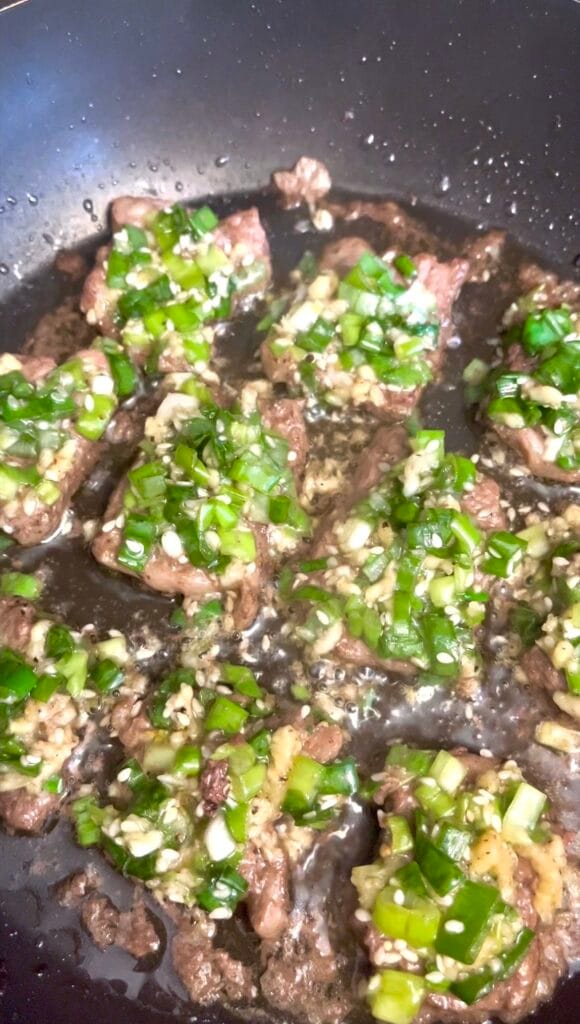
This recipe pairs that incredible negi shio sauce with thinly sliced beef cooked in a beautifully simple way. The beef gets seared on one side, flipped, topped generously with the sauce, then steamed gently with the lid on until perfectly tender and juicy. The sauce infuses into every fibre of the meat and the result is genuinely restaurant-quality in under 20 minutes.
The sauce also makes more than you need for one serving, which is intentional. Leftover negi shio is incredible spooned over rice, tossed through noodles, or used as a dipping sauce for gyoza. Make a double batch and keep it in the fridge. You’ll reach for it constantly.
Ingredients
For the beef:
- 200g beef slices, thinly sliced
- 2 tbsp cooking oil
For the negi shio sauce (salt and spring onion sauce):
- 1 cup spring onion, finely chopped
- 1 tbsp garlic, minced
- 1/2 tbsp white sesame seeds
- 1 tbsp sesame oil
- Salt to taste
- Black pepper to taste
To serve:
- Steamed white rice
Instructions
1. Cook the rice first
Before you do anything else, get your rice started. Whether you’re cooking it fresh on the stove or reheating frozen rice, start it now so it’s ready at the same time as the beef. Freshly cooked fluffy rice is the perfect base for this dish and you want it hot and ready to go the moment the beef comes off the pan.
If you’re cooking rice from scratch, get it going on the stove using the absorption method and let it do its thing while you prep and cook everything else. If you’re using frozen rice, pop it in the microwave a couple of minutes before the beef is done.
❤️ Tip: Frozen rice is one of the best meal prep tricks for fast weeknight dinners. Cook a big batch of rice at the beginning of the week, portion it into zip-lock bags or airtight containers, and freeze. When you want a quick dinner, microwave it straight from frozen in about 2-3 minutes and it comes out perfectly fluffy every single time.
2. Slice the beef
If your beef isn’t already pre-sliced, slice it yourself now into thin, even pieces roughly 3-4mm thick. Thin slices are important for this recipe because they cook through very quickly and evenly in the pan, and they’re also much more tender and enjoyable to eat than thick chunks. Slice against the grain of the meat wherever possible, which means cutting perpendicular to the direction the muscle fibres run. Slicing against the grain shortens those fibres and makes the beef noticeably more tender with every bite.
A good cut of beef for this recipe is something relatively tender that works well with quick, high-heat cooking. Ribeye, sirloin, scotch fillet, or beef bulgogi slices from an Asian grocery store all work beautifully. Pre-sliced beef from Asian grocery stores is a fantastic time-saving option and is specifically cut to the perfect thinness for this style of cooking.
❤️ Tip: If you’re slicing your own beef at home, pop the beef in the freezer for about 20-30 minutes before slicing. Partially frozen beef is significantly firmer and much easier to slice thinly and evenly than completely thawed beef. It makes a real difference to how neat and consistent your slices turn out, which in turn affects how evenly they cook.
3. Make the salt and spring onion sauce
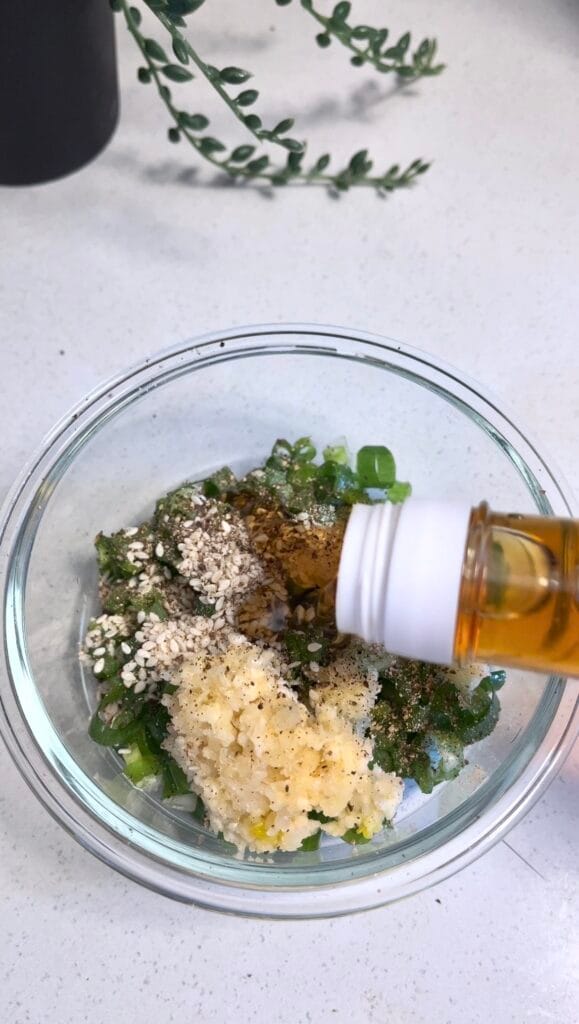
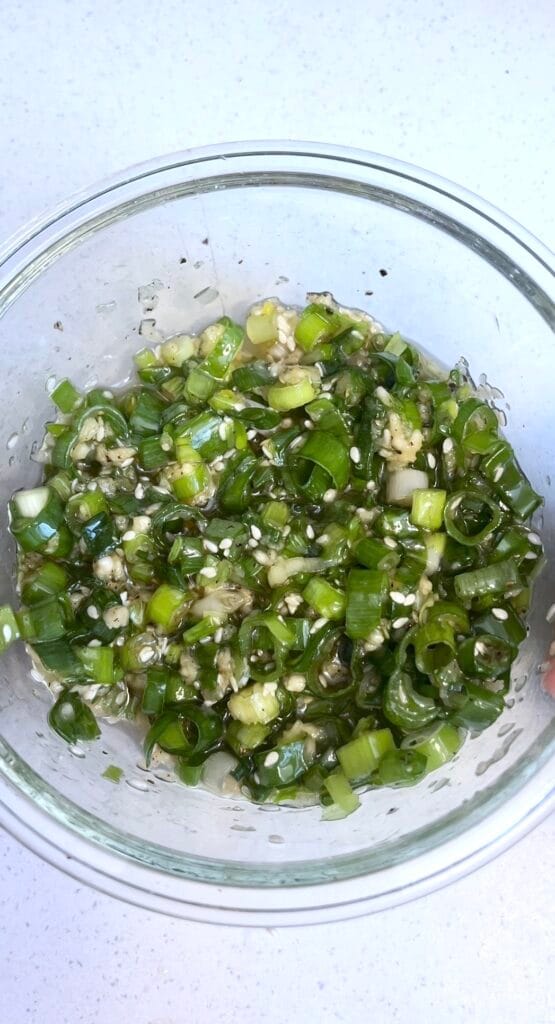
This sauce comes together in about two minutes and is the heart of the entire dish. Finely chop 1 cup of spring onion and add it to a small bowl. Add 1/2 tbsp minced garlic, 1/2 tbsp white sesame seeds, 1 tbsp sesame oil, salt to taste, and black pepper to taste. Mix everything together thoroughly until well combined.
Taste the sauce at this point and adjust the seasoning. It should taste quite assertively seasoned with a good amount of salt since it’s going to be spread over the beef and also served over rice, both of which need the sauce to be well seasoned enough to season them as well. Don’t be shy with the salt here. If it tastes right on its own it will likely taste under-seasoned on the beef and rice.
❤️ Tip: The quality of your sesame oil makes a real difference to this sauce. Use a good quality toasted sesame oil rather than a light or refined sesame oil. Toasted sesame oil has that deep, nutty, intensely fragrant quality that is what makes this sauce so special. It’s available at any Asian grocery store and most large supermarkets and is worth having in your pantry at all times.
4. Sear the beef
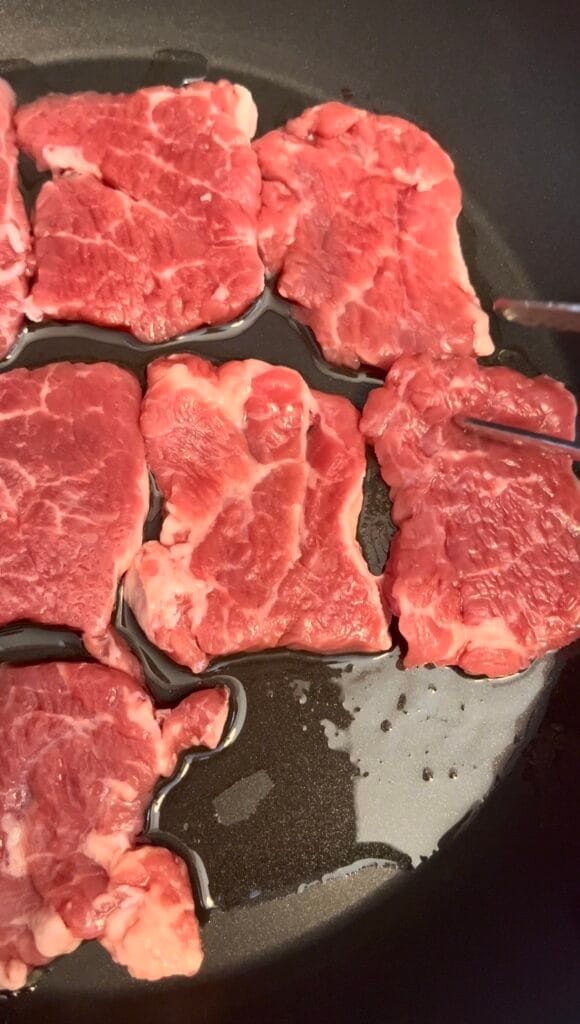
Heat 2 tbsp cooking oil in a wide flat pan or skillet over medium-high heat until the oil is hot and shimmering. Add the beef slices in a single layer, making sure each piece has a little space around it. If your pan isn’t large enough to fit all the beef in a single layer, cook it in two batches rather than crowding the pan. Overcrowding the pan drops the temperature and causes the beef to steam rather than sear, which means you miss out on that gorgeous golden crust.
Let the beef cook undisturbed on the first side until it’s roughly half cooked through. You can tell it’s half cooked by looking at the side of each slice and watching the colour change from raw red at the bottom and gradually creep upward toward the middle. Once the colour has changed roughly halfway up the side of each slice, it’s time to flip.
❤️ Tip: Don’t flip the beef too early. Letting it sit undisturbed on the first side allows a proper sear to form on the surface of the meat. This sear not only looks beautiful but adds flavour and creates a slight crust that gives the beef a more interesting texture. If the beef sticks when you try to flip it, it’s not ready yet. A proper sear will release cleanly from the pan surface on its own.
5. Add the sauce and steam
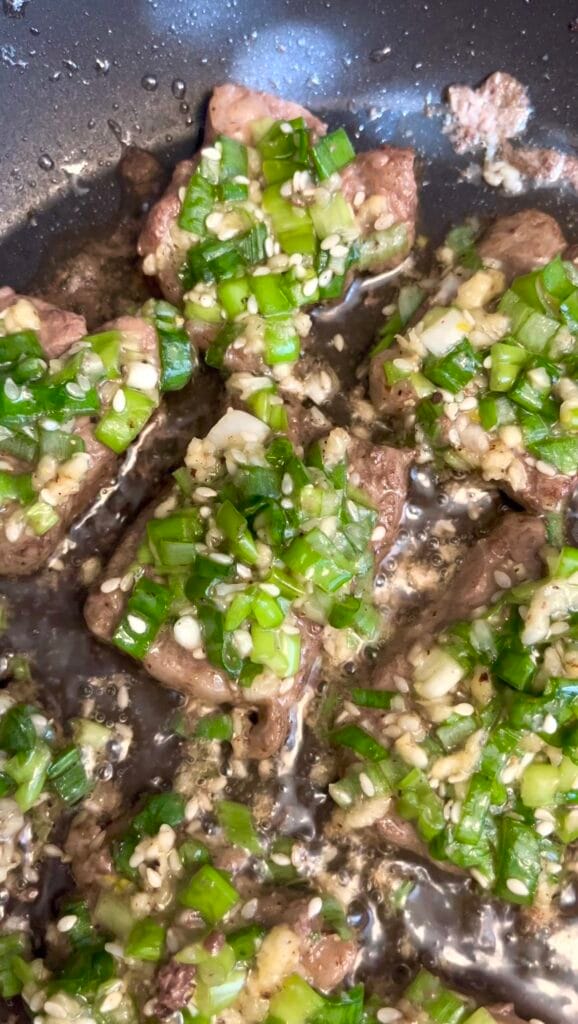
Once the beef is flipped, immediately spoon a generous amount of the salt and spring onion sauce directly on top of each piece of beef. Don’t be shy here. You want a good layer of sauce sitting on top of the beef rather than just a thin smear.
Place the lid on the pan immediately and reduce the heat to medium. Let everything steam together for about 1-2 minutes. The steam trapped under the lid gently cooks the beef through from the top while the sauce on top softens slightly and infuses into the meat. The garlic and spring onion will become fragrant and slightly softened, the sesame oil will warm and release its beautiful nutty aroma, and the beef will cook through to perfectly tender and juicy.
Check the beef after about 1-1.5 minutes by pressing a piece lightly with your finger or cutting into the thickest piece. It should be just cooked through with no raw pink remaining in the centre but still juicy and tender. Remove from the heat immediately.
❤️ Tip: The key to keeping the beef tender and juicy and not dry and overcooked is to err on the side of undercooking slightly rather than overcooking. Thin beef slices carry a lot of residual heat and will continue cooking for a minute or so after you take the pan off the heat. Pull them off just before they look completely done and they will be absolutely perfect by the time they hit the bowl.
6. Serve over rice
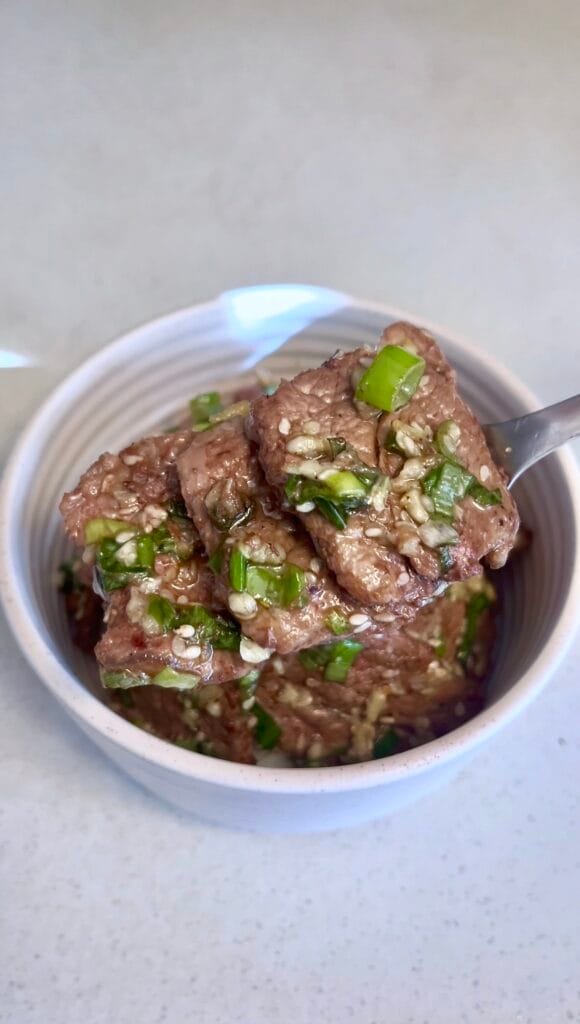
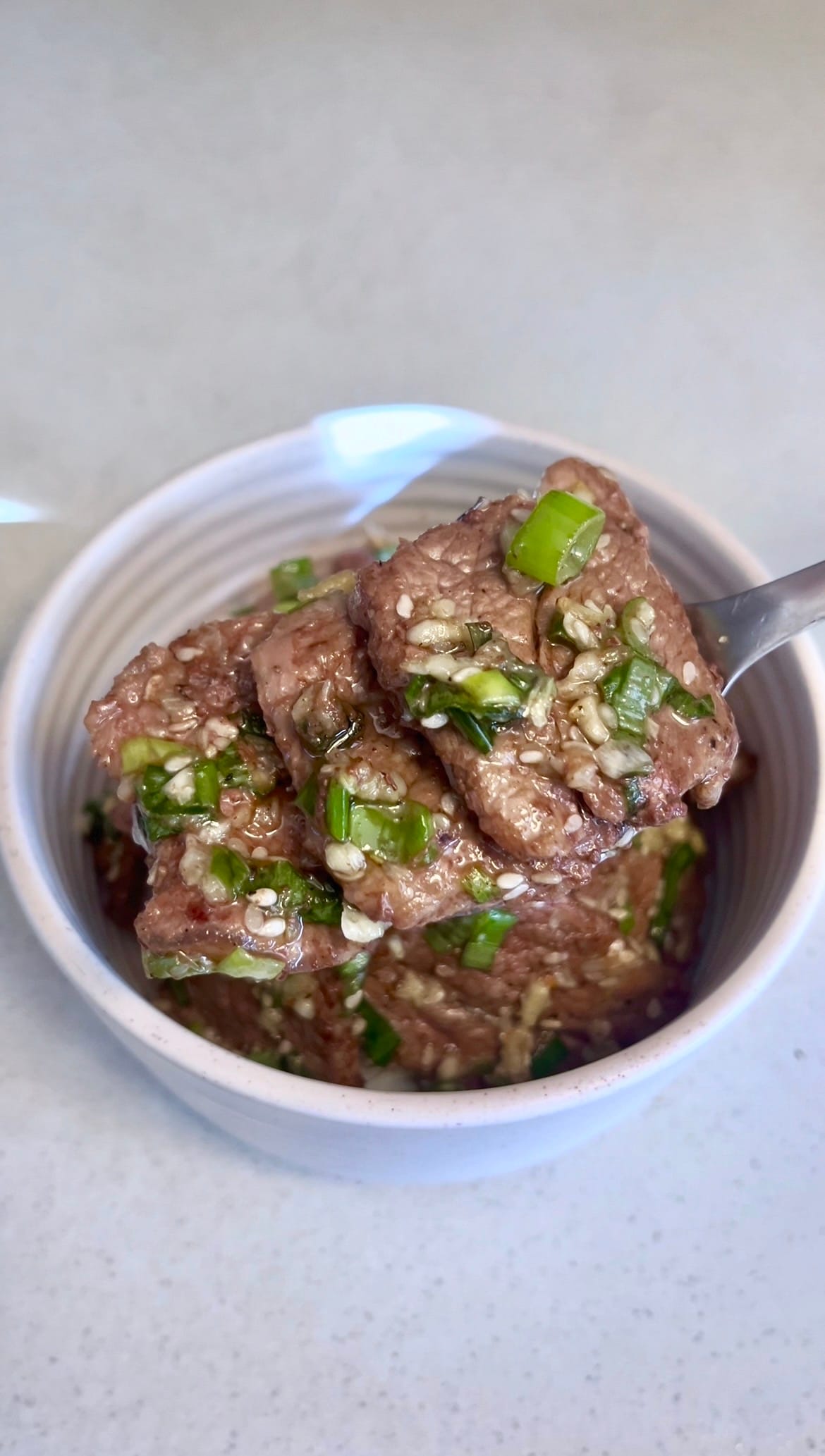
Spoon a generous serving of steamed white rice into a bowl. Arrange the salt and spring onion beef pieces over the rice. Then spoon any remaining sauce from the pan over the beef and rice generously. Don’t let any of that sauce go to waste. It is genuinely incredible over the rice and makes the whole bowl taste cohesive and deeply flavoured.
Any leftover sauce that wasn’t used on the beef can be spooned into a small jar and stored in the fridge for up to 3 days. It is wonderful on noodles, over steamed vegetables, as a dipping sauce, or spread on the rice in future meals.
❤️ Tip: Spoon the extra sauce over the rice as well as the beef rather than just the beef. The sauce soaks into the warm rice and seasons it beautifully, turning a plain bowl of white rice into something that is genuinely delicious on its own. This is one of those small things that takes the whole bowl from good to outstanding.
Extra Tips
1. Choosing the right beef
Thinly sliced beef cuts work best for this recipe. Ribeye or scotch fillet gives you beautiful marbling and rich flavour. Sirloin gives you a leaner result that is still very tender. Pre-sliced beef from Asian grocery stores labelled as beef rolls or bulgogi beef is an incredibly convenient option and is cut to exactly the right thinness for this style of cooking. Avoid thick cuts or stewing beef for this recipe as they won’t cook through quickly enough or have the right texture.
2. The sauce is incredibly versatile
The salt and spring onion sauce in this recipe makes more than you need for one serving of beef and this is completely intentional. The leftover sauce is one of the most useful condiments you can have in your fridge. Spoon it over noodles with a drizzle of soy sauce for an instant meal. Use it as a dipping sauce for Korean pancakes or dumplings. Stir it through steamed vegetables. Add it to fried rice. It keeps well in an airtight container in the fridge for up to 3 days and gets better as it sits and the flavours meld together.
3. Storage and leftovers
The cooked beef is best eaten fresh on the day it’s made. Reheated beef can become dry and slightly tough, especially with thin slices. If you do have leftover cooked beef, store it in an airtight container in the fridge for up to 1 day and reheat very gently in a pan over low heat with a tiny splash of water to add a little moisture back. The leftover sauce stores much better than the beef and is genuinely worth keeping. Store it separately in a small jar in the fridge for up to 3 days.
Japanese Salt and Spring Onion Beef Rice Bowl
Ingredients
For the beef:
- 200 g beef slices thinly sliced
- 2 tbsp cooking oil
For the negi shio sauce (salt and spring onion sauce):
- 1 cup spring onion finely chopped
- 1 tbsp garlic minced
- 1/2 tbsp white sesame seeds
- 1 tbsp sesame oil
- Salt to taste
- Black pepper to taste
To serve:
- Steamed white rice
Instructions
- Cook the rice first: Cook fresh rice on the stove using the absorption method or reheat frozen rice in the microwave a couple of minutes before the beef is finished.
- Slice the beef: If not pre-sliced, cut 200g beef into thin even pieces roughly 3-4mm thick.
- Make the negi shio sauce: Finely chop 1 cup spring onion and add to a small bowl. Add 1/2 tbsp minced garlic, 1/2 tbsp white sesame seeds, 1 tbsp sesame oil, salt to taste and black pepper to taste. Mix thoroughly until well combined. Taste and adjust seasoning.
- Sear the beef: Heat 2 tbsp cooking oil in a wide pan over medium-high heat until hot and shimmering. Add beef slices in a single layer. Cook undisturbed on the first side until roughly half cooked through. Flip each piece carefully.
- Add the sauce and steam: Immediately spoon a generous amount of negi shio sauce on top of each piece of flipped beef. Place the lid on the pan and reduce heat to medium. Steam for 1-2 minutes until the beef is just cooked through with no raw pink remaining but still juicy and tender. Remove from heat immediately.
- Serve over rice: Spoon steamed white rice into a bowl. Arrange the beef over the rice and spoon all remaining sauce from the pan generously over the beef and rice. Don't let any sauce go to waste. Serve immediately.
Notes
- Choosing the right beef: Ribeye, scotch fillet or sirloin all work well. Pre-sliced beef rolls or bulgogi beef from Asian grocery stores are a great convenient option cut to exactly the right thinness. Avoid thick cuts or stewing beef.
- The sauce is incredibly versatile: The negi shio sauce makes more than needed for one serving intentionally. Leftover sauce keeps in an airtight container in the fridge for up to 3 days and is wonderful over noodles, tossed through fried rice, or used as a dipping sauce for gyoza.
- Storage and leftovers: Cooked beef is best eaten fresh on the day. Leftover beef can be stored in an airtight container in the fridge for up to 1 day and reheated gently in a pan over low heat with a tiny splash of water. Store leftover sauce separately in a small jar in the fridge for up to 3 days.